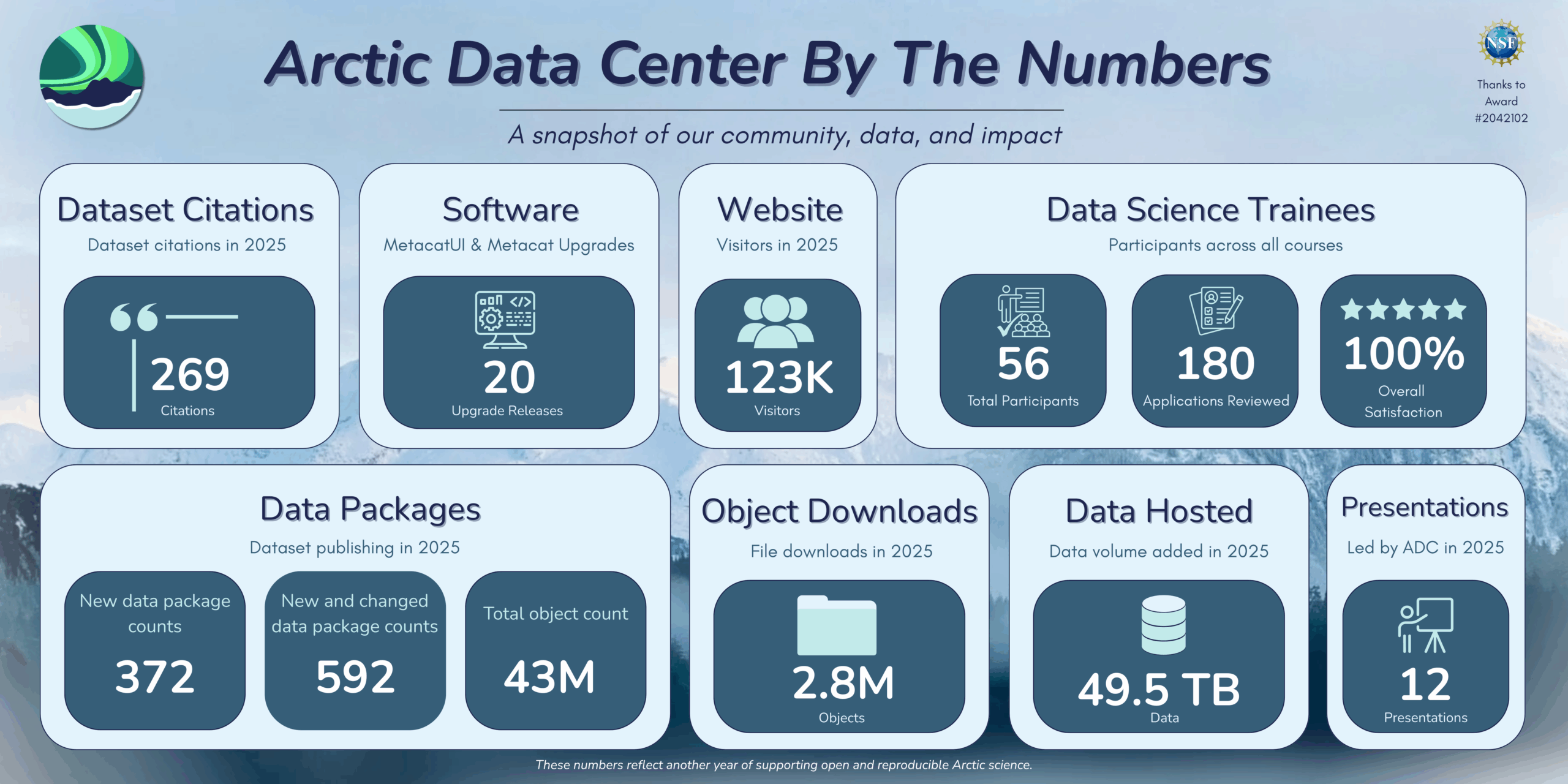
As another year draws to a close, the Arctic Data Center team is taking a moment to reflect on the progress, successes, and collaborations that shaped our work over the past 12 months. In this annual recap, we highlight key metrics from our growing community, share how we’ve adapted to evolving community needs, and showcase updates to our website and cyberinfrastructure. We also look back on our data science training courses, outreach efforts, and notable datasets and partnerships that helped advance Arctic research in 2025. Finally, we share what we’re looking forward to as we prepare for an exciting year ahead in 2026.
Cyberinfrastructure Advancements
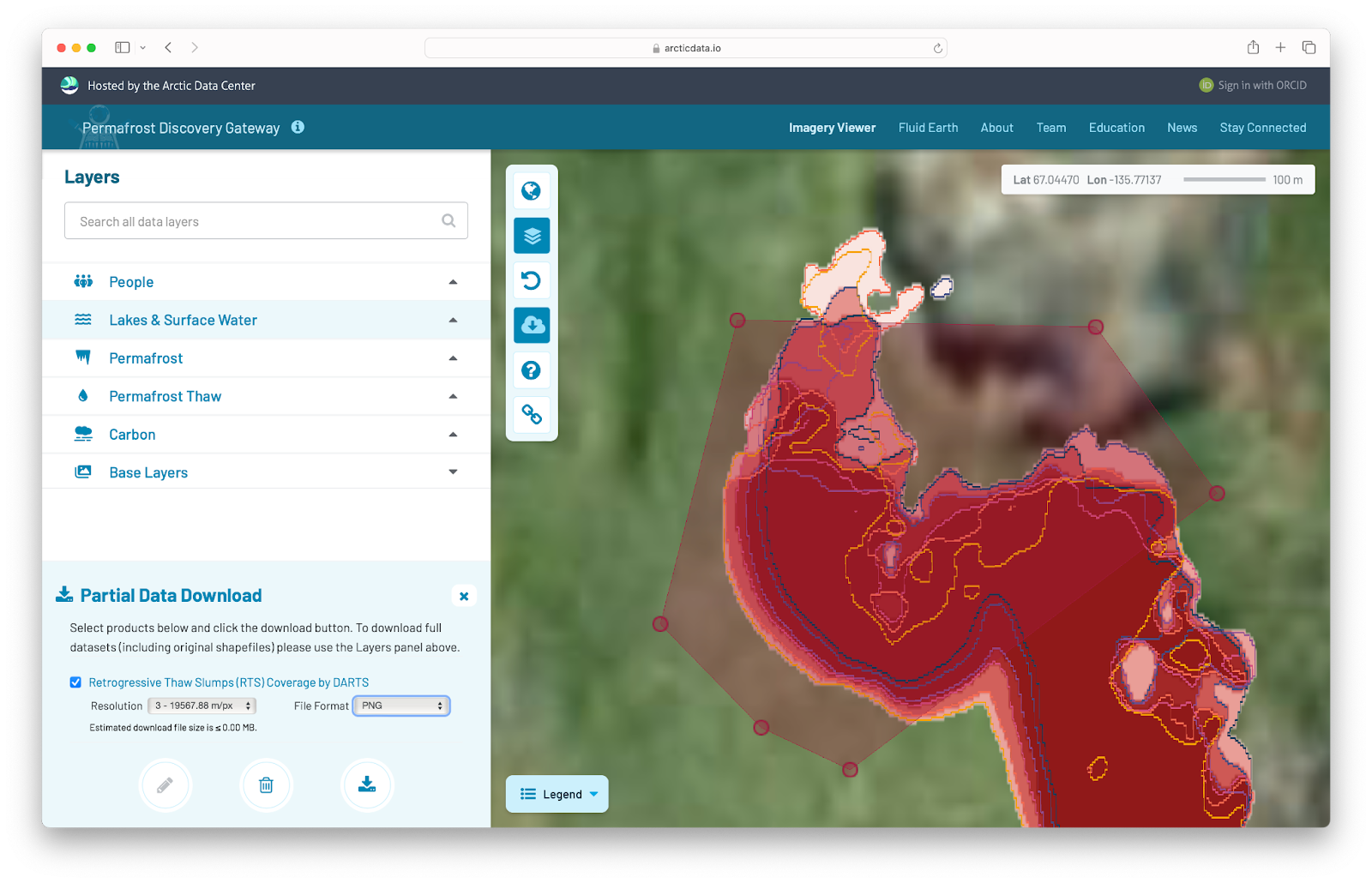
Screenshot of the partial data download feature on the Permafrost Discovery Gateway
Throughout the year, our cyberinfrastructure team has continued to work on strengthening our core services for Arctic researchers, from updates to the Arctic Data Center repository to improvements in our data tools, including the portal system. MetacatUI, our client-side web interface, received 6 new upgrades to enhance the user-experience when searching the data repository and navigating data portals like the Permafrost Discovery Gateway. Some of the most anticipated features from those upgrades were the ability to download geospatial data for areas of interest directly from the map (2.33.0), allow for filtering of map features by attribute (2.34.0), and support for copying attributes via reference linking (2.34.0). To learn more about all MetacatUI releases, visit our developer notes, which detail the upgrades that are made and how the user can experience them firsthand on the Arctic Data Center.
Several of the MetacatUI releases have introduced more customizable features for the community to use. In Metacatui 3.35.0, our developers released the initial version that embedded featured stories from the Local Environmental Observer (LEO) Network directly into the Permafrost Discovery Gateway portal. This allows users to view curated, continuously updated streams of posts with summaries, dates, and links back to the original LEO pages. Recently, this feature was expanded to include updated Virtual Tours made available by the Byrd Polar and Climate Research Center at Ohio State University along with prominently featured Arctic locations and related datasets on the portal. Additionally, Shiny Apps are now supported in our data portals, allowing for the creation of custom interactive data visualizations. By embedding Shiny Apps directly within a portal page, users can explore datasets in real-time, filter information, and visualize patterns. Together, all three features in the portal complement each other and enrich the user-experience, and can easily be adopted by other groups who are interested in utilizing this tool made available by the Center. The LEO stories are accessible under the Permafrost Observations tab noted in the screenshot below. 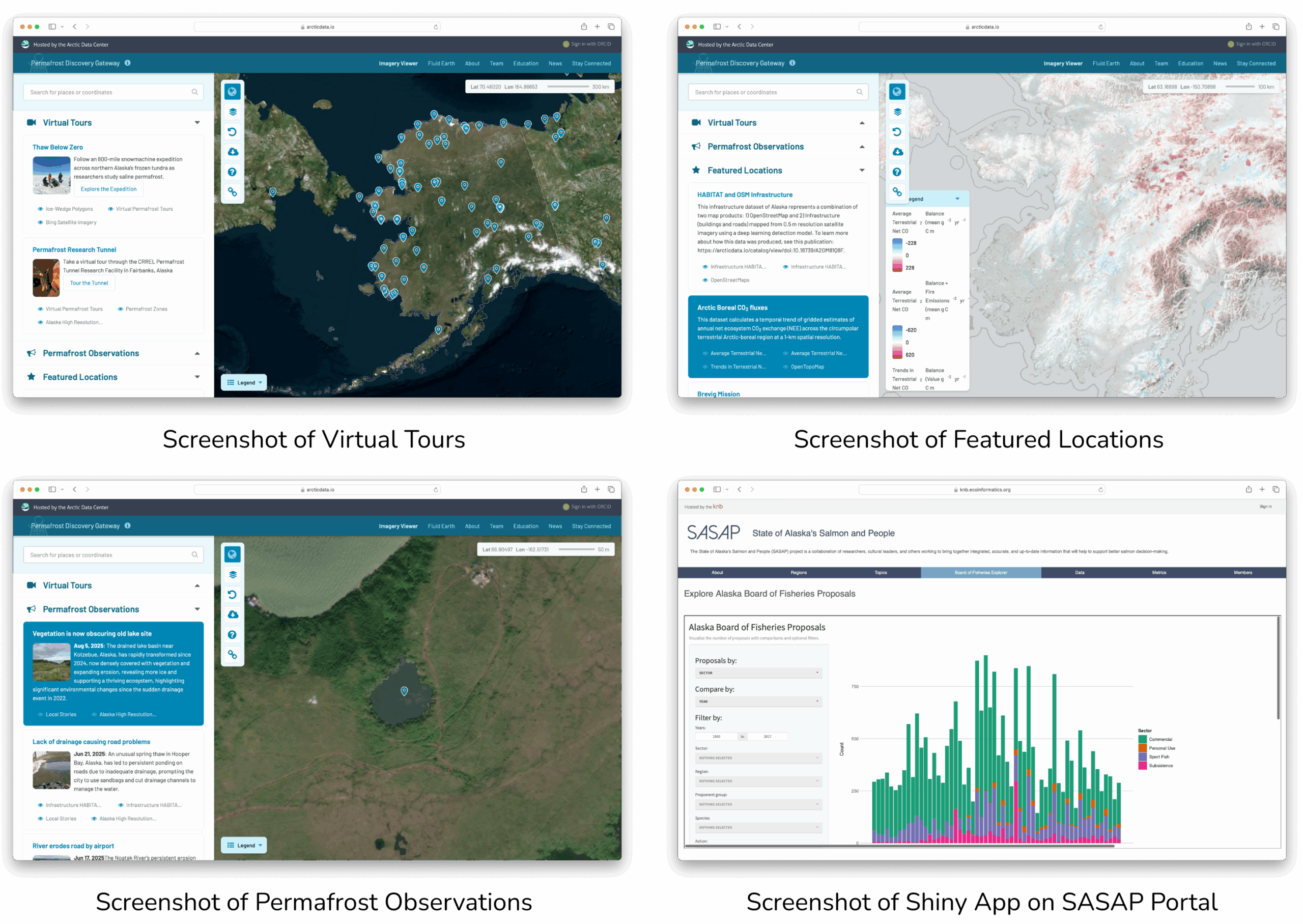
In the last few years, the Center has seen an increase in researchers depositing large datasets, and this year was no exception. Our Development Team made it a priority to ensure our cyberinfrastructure can support this massive data growth of 450 TB and over 50 million files. Metacat, which serves as the backend service for the Arctic Data Center repository, played a central role in enabling change at this scale.
To help manage the cost of storage and maintain access for Arctic researchers and communities, the Arctic Data Center introduced a new policy for storing large multi-terabyte model output datasets. Researchers interested in archiving large model outputs are encouraged to contact Arctic Data Center staff well in advance of publication or reporting deadlines with a statement on the model output’s value to researchers and the community, how the output could be re-used by others, and an estimation of how long you believe the model outputs will be useful. With the release of Metacat 3.1.0, our Development Team introduced significant performance enhancements to support the management of large datasets.
Strengthening Our Mission and Vision
This year, we prioritized clearly communicating our missions and vision to the Arctic research community and beyond. While our core purpose has remained consistent, the complexity and growth of Arctic research make it essential that our role as a steward of research data is immediately apparent.
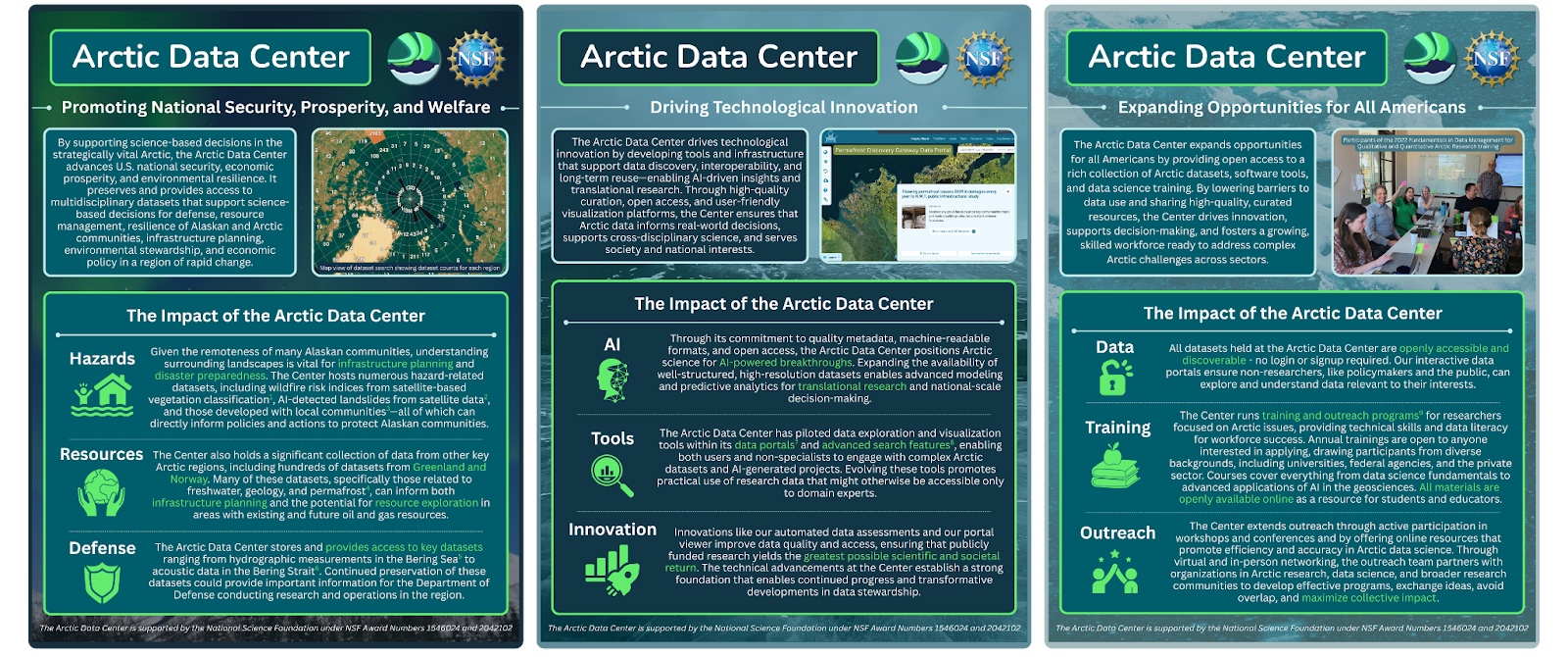
The main step we took was updating our About Us page along with the creation of new one-pagers highlighting key priorities: Promoting National Security, Prosperity, and Welfare; Driving Technological Innovation; and Expanding Opportunities for All Americans. These resources make it either for the community to understand what we do, why it matters, and how we support research and discovery.
Our mission—to help the research community reproducibly preserve and discover all products of NSF-funded science in the Arctic—continues to guide everything we do. By emphasizing our mission more clearly, we strengthen our connection with the community and provide a transparent framework for how we continue to enable high-quality, open, and reusable Arctic research.
Enhancing Our Website for the Community
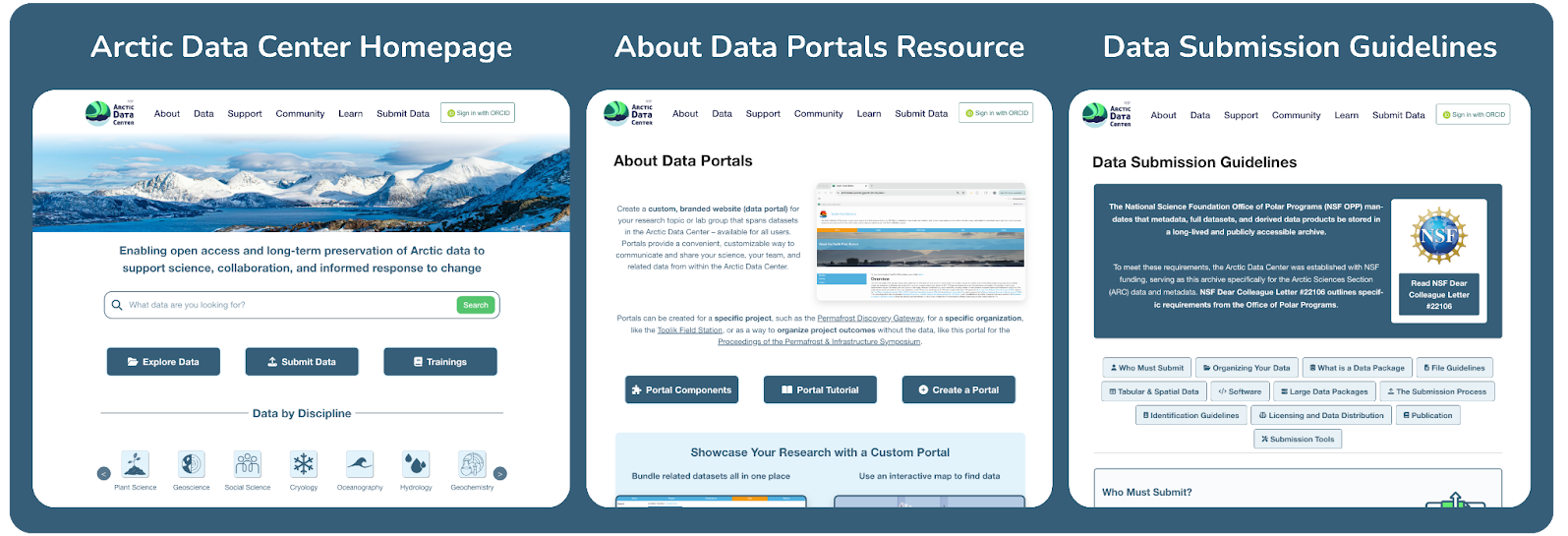
In the latter half of the year, we introduced several updates to our website to improve usability and better support the Arctic research community. Our homepage was redesigned to more clearly highlight our mission of enabling open access and long-term preservation of Arctic data to support science, collaboration, and informed responses to change. Visitors can now more easily explore data by discipline and see recent submissions, submit datasets, explore training curriculum, explore our latest news features, and find upcoming opportunities hosted by the Center.
Additionally, we updated our About Data Portals page to better showcase the flexibility and functionality of our customizable data portals. These portals allow researchers, lab groups, and organizations to aggregate datasets from the Arctic Data Center, create interactive maps, embed visualizations, and build custom pages to highlight publications, photos, collaborators, and more. With enhanced metrics and filtering tools, users can explore, share, and communicate their research more effectively.
Lastly, we revised our Data Submission Guidelines page to present NSF Office of Polar Programs and Arctic Data Center requirements for submitting metadata, datasets, and derived data products clearer. Our Data Preservation and Working with Data pages now follow a similar easy to navigate layout. Together, these updates make the Arctic Data Center website a more intuitive, informative, and effective resource for the community, supporting the discovery, sharing, and preservation of Arctic research data.
Data Science Training Courses
Every year our team looks forward to welcoming new faces of Arctic researchers who visit for our data science trainings, both in-person and online. In 2025, we were able to support 56 participants to learn and expand their expertise in R and Python through our courses. However, interest in these trainings continues to grow as we received 180 applicants across all courses. For each training, our outreach team wrote a reflectionary piece capturing key events from the week. You can explore those pieces here:
- Teaching Data Science with Real Applications: Recapping the Arctic Data Center’s 2025 Scalable Computing in Python Training
- Empowering Arctic Researchers with Reproducible Data Science Skills: Key Takeaways from the Arctic Data Center’s February 2025 Virtual Training
- Strengthening Data Practices in Arctic Research: A Recap of the Arctic Data Center’s January 2025 Data Management Training

We deeply appreciate the opportunity to support our community through these trainings. While demand always exceeds our available capacity, our outreach team works hard to ensure each participant has a meaningful learning experience. We remain committed to expanding opportunities to ensure more Arctic researchers can strengthen their data science skills.
Meetings We Attended
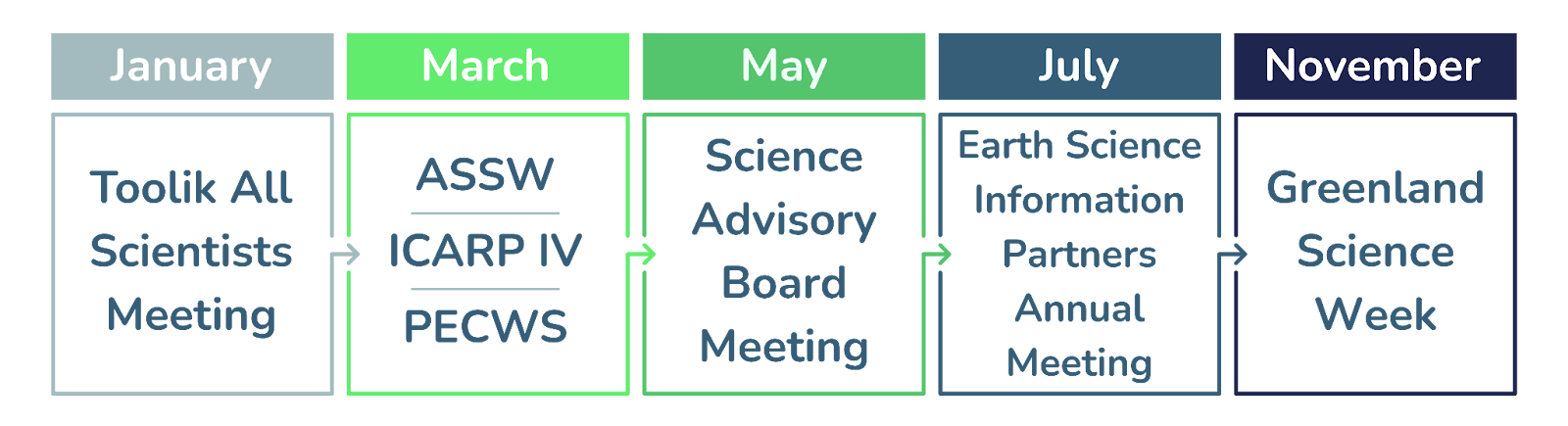
- Toolik All Scientists Meeting
Our Community Engagement and Outreach Coordinators, Nicole Greco and Angie Garcia kicked off the year by attending the Toolik All Scientists Meeting in Santa Barbara, California where we held a workshop on Ethical Principles for Open-Access Data. The workshop began with an introduction to the FAIR (Findable, Accessible, Interoperable, Reusable) and CARE (Collective Benefit, Authority to Control, Responsibility, Ethics) Principles, followed by a breakout activity, and ending with a full room discussion and wrap-up Q&A session. During the breakout activity, participants examined two case studies: one where a research team worked on Indigenous lands but not with community members and were met with negativity, and another where a research team worked directly with Indigenous community members and were welcomed onto their lands. Participants were tasked with considering the responsibilities that researchers and communities have to ensure ethical data collection, preservation, and use.
- ASSW/ICARP IV/PECWS
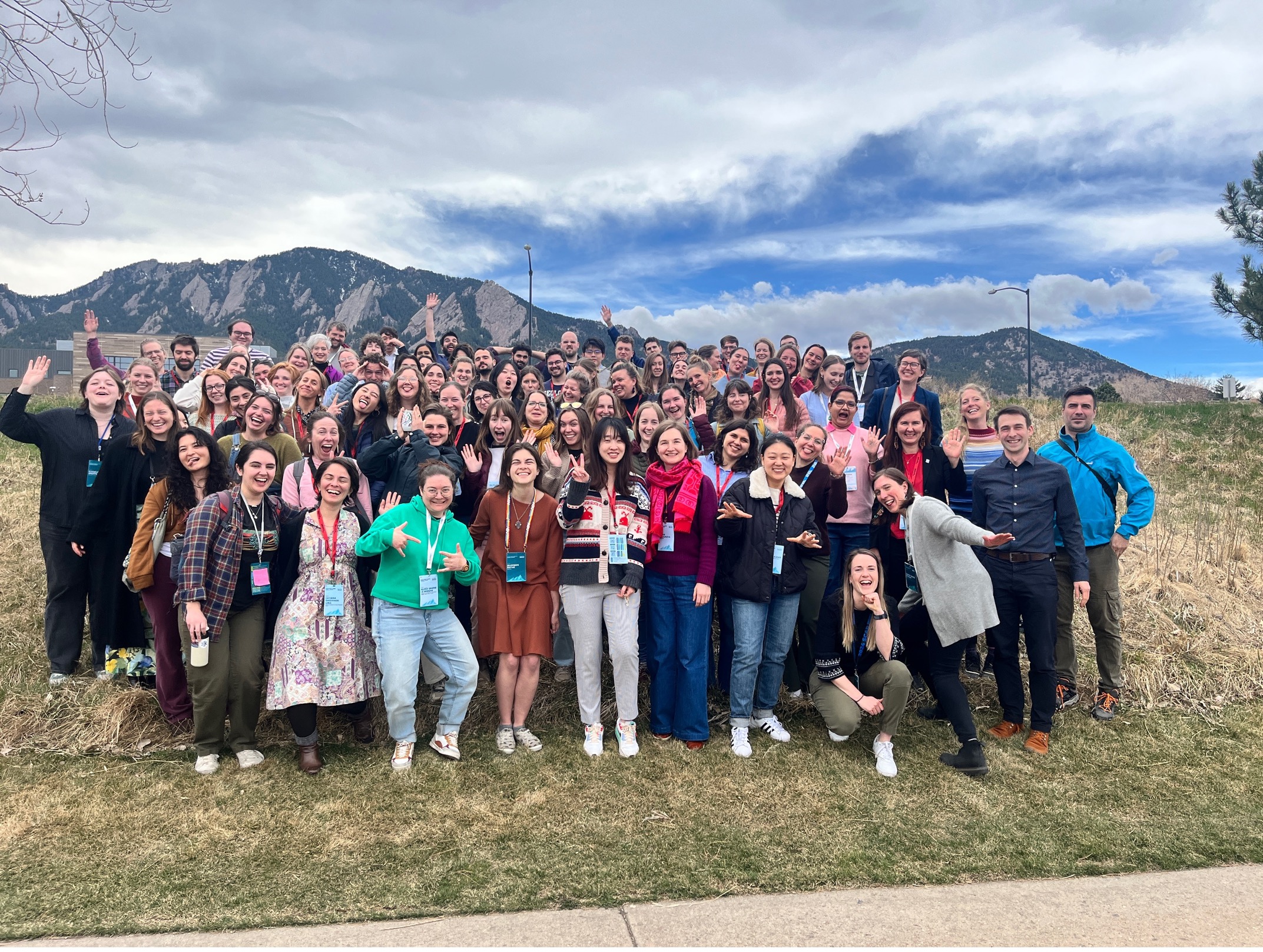
Participants and organizers of PECWS. Photo Credit: Lauren Lipuma, CIRES, CU Boulder.
Greco and Garcia also attended Arctic Science Summit Week (ASSW), the International Conference on Arctic Research Planning (ICARP) IV, and the Polar Early Career World Summit (PECWS) from March 20-28th in Boulder, Colorado. Highlights from the conference were featured in our blog post: “Sharing Knowledge and Shaping the Future of Research at Arctic Science Summit Week: An Arctic Data Center Perspective”. We were especially excited to host workshops for our collaborators Navigating the New Arctic, the Polar Early Career Community Office, the Association of Polar Early Career Scientists, and others during the conference.
- Science Advisory Board Meeting
We held an in-person Science Advisory Board (SAB) meeting from May 19-20th in Santa Barbara, where we discussed updates at the Arctic Data Center, a vision for our renewal proposal, and future directions for our cyberinfrastructure, data curation, and outreach teams. The meeting prioritized feedback and discussion and concluded with a writeup of recommendations for the Arctic Data Center from the SAB members. Learn more about our Advisory Board members here.
- Earth Science Information Partners Annual Meeting
Members of our software developer team and Matt Jones, Director of the Arctic Data Center, gathered in Seattle, Washington from July 22-25 to showcase the progress made on the Data Quality Assessment tool at the Earth Science Information Partners (ESIP) Annual Meeting, themed Innovation to Impact. Developer Jeanette Clark noted: “ESIP is always great for finding collaborations and staying up to date with what the community is doing. It was exciting to share our progress with the data quality assessment and to get inspiration for ways we can improve it from other groups that are working in similar areas.”
Clark and other developers across the team continue to make ongoing improvements to the Data Quality tool. Developed in collaboration with DataONE, it is intended to help users understand how the FAIR suite evaluates metadata based on these four principles: Findability, Accessibility, Interoperability, Reusability. The tool scores each dataset and indicates which elements of the metadata meet the evaluation criteria. Ultimately, it serves as a guide for researchers to identify where improvements can be made to strengthen their metadata. To learn more, explore here.
- Greenland Science Week
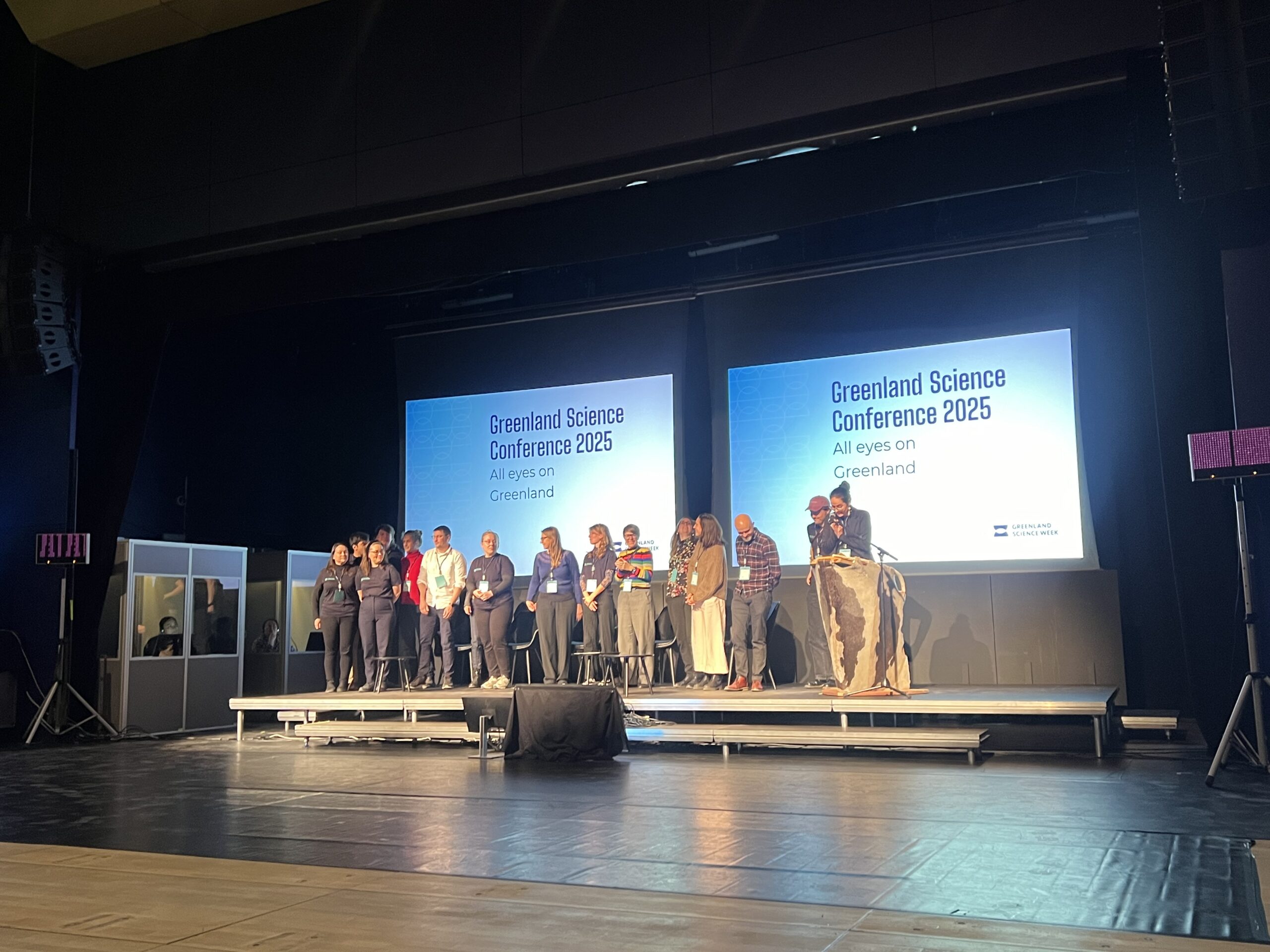
Greenland Science Week Closing Plenary. Photo Credit: Angie Garcia
From November 10-14th, Community Engagement and Outreach Coordinator Garcia, visited Nuuk, Greenland for Greenland Science Week and other community events in collaboration with the QGreenland and DataONE projects. Many of the presentations and informal conversations echoed the meeting’s theme: All Eyes on Greenland. This week offered valuable insight into the research priorities of the research community and Greenlanders, and how partnership and open science can support Greenland. Garcia met with researchers, local organizations, and other projects to discuss data needs and potential collaborations which was valuable for the cross-project presence at the meeting.
Spotlighting our Collaborators and Datasets
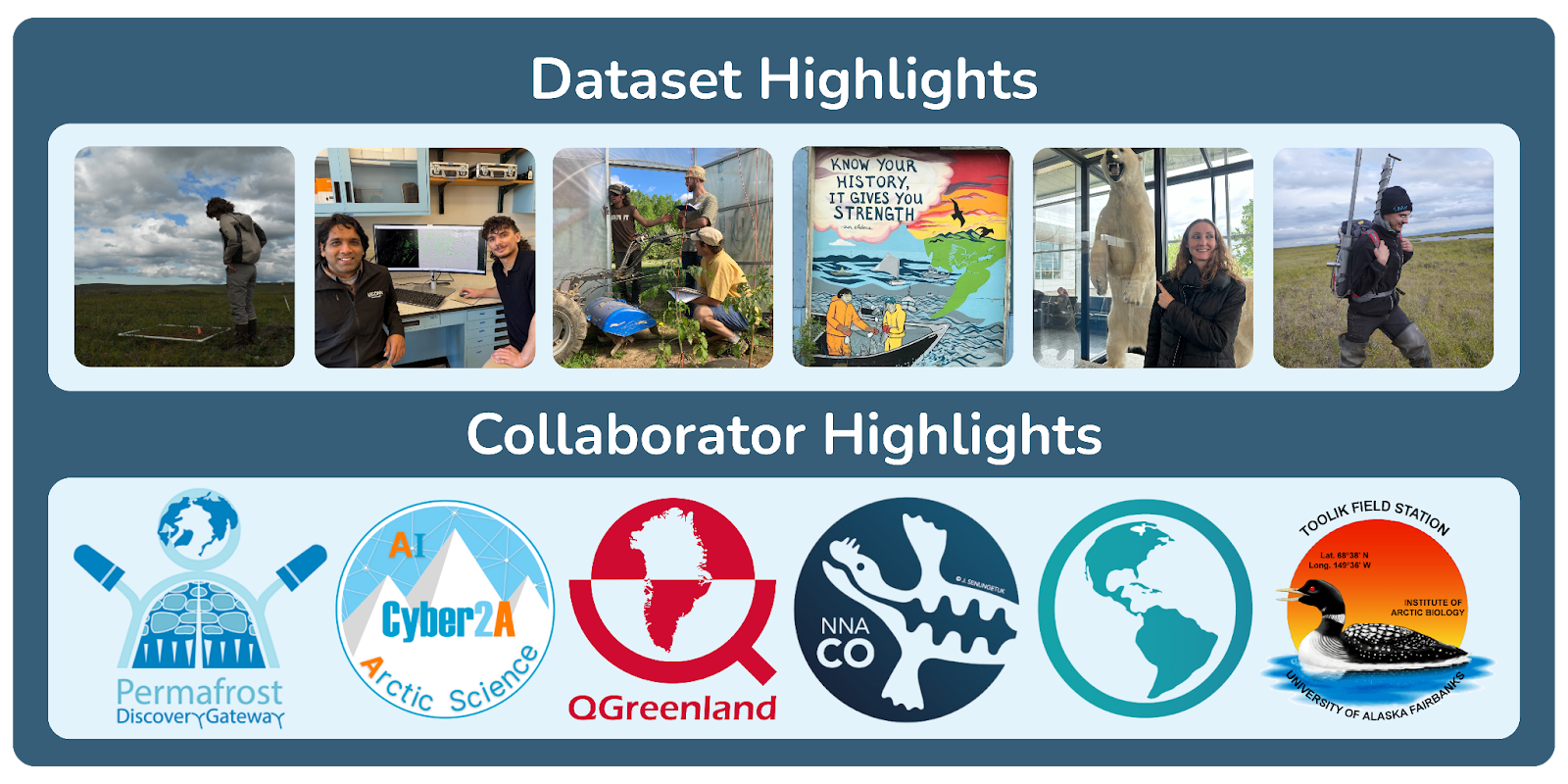
In 2025, we reinvigorated our News and Features page with monthly Dataset and Collaborator Highlights, as well as recaps of our data science training courses and workshop experiences, totaling 22 posts. Our Dataset Highlights serve two purposes: to highlight the incredible work of the researchers who submit data to us and showcase the role the Arctic Data Center plays in preservation and discovery of Arctic data. Featured datasets covered topics from permafrost monitoring using artificial intelligence to how Alaskan Native Elders define successful aging. This wide range of topics allowed our community to learn more about the diverse disciplines and data types of the 7,804 datasets housed by the Arctic Data Center.
Our new Collaborator Highlight series explores the relationships between the Arctic Data Center and partner organizations like the Permafrost Discovery Gateway, Cyber2A project, QGreenland, Navigating the New Arctic, DataONE, and Toolik Field Station. These Highlights often intersect with our Dataset Highlights, like the feature on Elias Manos’ permafrost dataset who works with the Permafrost Discovery Gateway and the feature on Dr. Laura Gough’s research exploring small mammal impact, who works closely with Toolik Field Station.
Lastly, we’ve revived our monthly newsletters that provide updates about Arctic Data Center and collaborator events. You can see past newsletters here and subscribe to future newsletters here.
Looking Forward to 2026
As we look ahead, the Arctic Data Center remains committed to fostering collaboration, strengthening the data science skills of the Arctic research community, and supporting the rapidly evolving landscape of Arctic research. With the continued growth of Arctic science, the need for data preservation and stewardship is more important than ever. We are excited for the opportunities that the coming year will bring.
In 2026, we will offer only one of our data science training courses, Reproducible Approaches to Arctic Research Using R, held on Zoom. As for all of our training courses, all curriculum will be openly available on our website following the course. We are also preparing to launch our biennial community survey in the coming months to gather input from the Arctic research community. Your feedback is essential in helping us improve our tools, services, and overall support for NSF-funded Arctic research products. The survey is anonymous and we encourage all community members to share their perspectives with us.
Entering 2026, we’re inspired by the evolving needs of the Arctic research community and energized by new opportunities to innovate. As the Arctic continues to change, the Center will continue to prioritize long-term data stewardship for our research community to trust. We sincerely thank all the researchers who have worked with our teams to share and preserve their data, and we look forward to another year of collaboration, learning, and shared progress together.
Written by Nicole Greco and Angie Garcia
Community Engagement and Outreach Coordinators