
Tag: Dataset Highlight

Enhancing Permafrost Monitoring and Detections through AI and Cross-team Collaboration

Background and Research Expertise Dr. Ingmar Nitze has always considered himself a “geo-geek” with a passion for all things geospatial, and naturally gravitated toward the field of physical geography for his studies. During his academic journey, he developed a strong interest in geoinformatics and remote sensing, tools that would later become central to Nitze’s research…. Read more »

New Dataset Using Deep Learning to Predict Permafrost Thaw Damage in the Arctic with Elias Manos

Background Born and raised in New England, Elias Manos was not familiar with the Arctic, but he had a deep interest in learning about this unfamiliar place. His academic background in geography more commonly dealt with geospatial data science, particularly analyzing satellite/aerial imagery with machine learning. While Manos was still an undergraduate, he began collaborating… Read more »

Documenting Yup’ik Place Names with Dr. Yoko Kugo

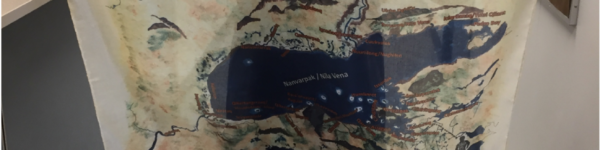
Dr. Yoko Kugo’s dataset – Iliamna Lake (Nanvarpak, Nila Vena) Native and Local Place Names (2016-2019) – compiled the local place names in and around Iliamna Lake in Alaska with the help of five specific communities: Iliamna, Newhalen, Kokhanok, Igiugig, and Levelock. Check out the dataset and learn more about the importance and applications of this data in our Q&A with Dr. Kugo.

Learning from the Hunters in Savoonga, with Dr. Henry Huntington

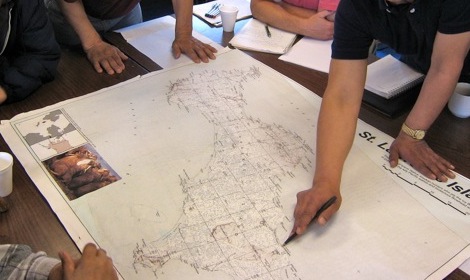
Highlight: “The hunters have a lot of valuable information to share, but often this information is overlooked or regarded as too difficult and time consuming to document. We’re helping show that’s not the case, that there are proven methods for documenting Indigenous knowledge efficiently and sharing that information,” – Dr. Henry Huntington. This dataset is… Read more »

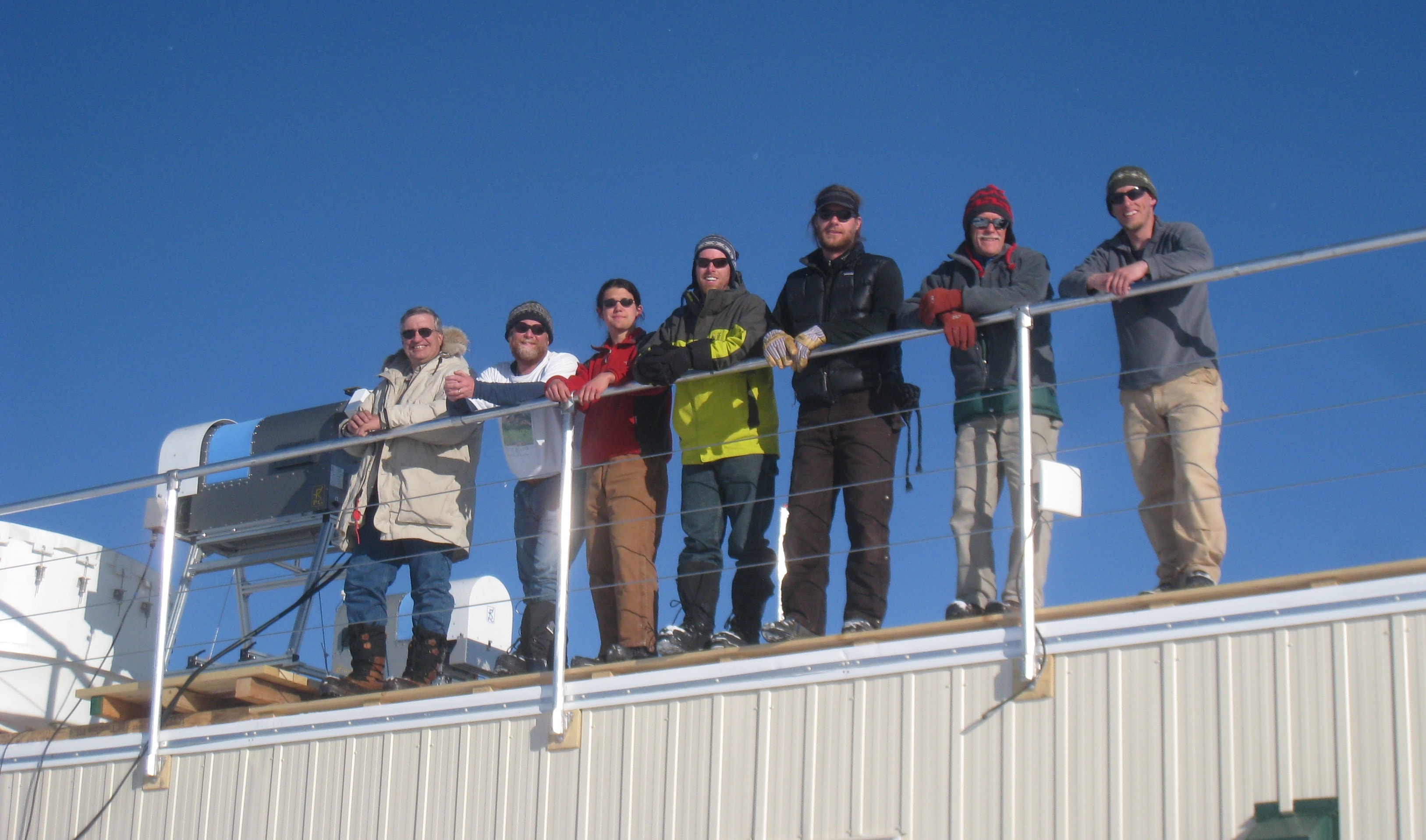
Exploring the Energy, Clouds, Atmosphere and Precipitation in Summit, Greenland, through ICECAPS, with Dr. Matthew Shupe

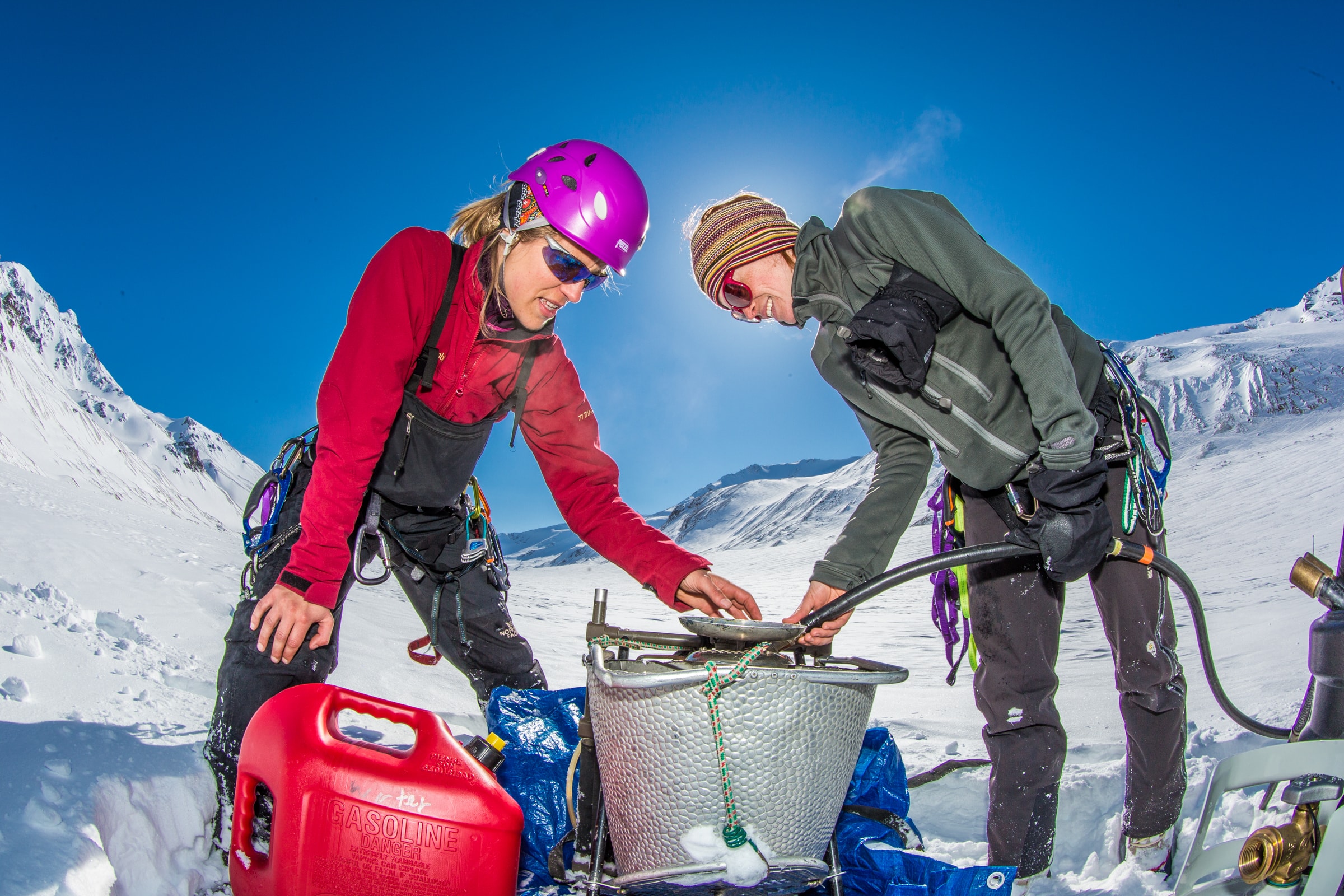
Highlight: “ICECAPS data and analyses have developed process relationships that relate cloud variability to different terms of the surface energy budget as a function of time of year. These relationships are used to assess large-scale models and identify specific model deficiencies that must be addressed to accurately represent the energy partitioning at Greenland’s surface,” –… Read more »

Phenological Mismatch in the Arctic, with Dr. Kathy Kelsey

Dr. Kathy Kelsey collecting greenhouse gas data. PC: Ryan T. Choi

Highlight: “These data are critical for understanding how climate-induced changes in the timing of migratory herbivore grazing should be included in projections of the role of Arctic and Subarctic ecosystems in the global climate system,” – Dr. Kathy Kelsey. Phenological mismatch is when the timing of food and/or habitat availability for a species is altered… Read more »

Investigating Rotten Ice, with Dr. Karen Junge

First-year Arctic sea ice at the height of summer melt in the Chukchi Sea (scale ~1 m). PC: Dr. Karen Junge

Highlight: “So-called rotten ice has experienced a long summer of melt, is fragile, difficult to work with, and has received little attention. Comprehensive information on its physical and microbiological properties does not exist,” – Dr. Karen Junge. Decreases in ice extent, concentration, and thickness have all been observed in the Arctic as sea ice responds… Read more »

Subsistence Harvests in Alaskan Communities along the Bering Sea, with Dr. James Fall

Distribution of the walrus harvest at Togiak. Photo courtesy ADF&G

  Highlight: “It is our goal to accurately describe contemporary subsistence activities and the issues faced by Arctic communities, all in support of sustaining these communities into the future,” – Dr. James Fall. This dataset, part of the same Bering Sea Integrated Research Program as a previous dataset highlight, investigates the implications of climate change… Read more »