Training Overview
Every spring, the Arctic Data Center invites Arctic researchers to attend our five-day virtual data science training course, Reproducible Approaches to Arctic Research Using R. This year, 18 researchers attended the course to learn reproducible and ethical research practices, methods for more easily documenting and preserving their data at the Arctic Data Center, an introduction to programming in R, and more. Participants ranged from graduate students to senior-level scientists who came from a broad range of disciplines and backgrounds.
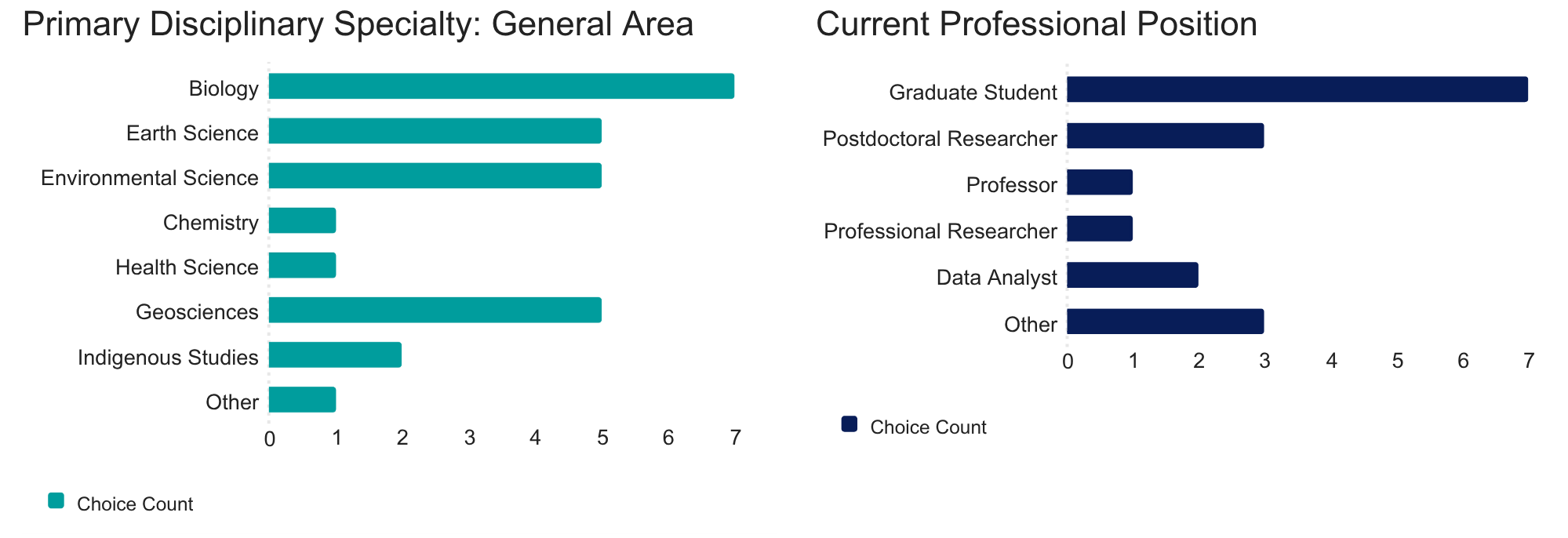
Responses from our 2026 post-course survey.
Each course concludes with an anonymous survey where participants share feedback on their experience. These responses play an important role in shaping future trainings and are used to refine the curriculum, organization, and overall structure of the course. Based on feedback from our 2025 cohort, this year’s training included a new session focused on data quality and reuse.
Lesson on Data Quality and Reuse
This new lesson introduced participants to the Arctic Data Center’s automated data quality assessments and best practices for checking data quality in R. The session focused on two broad categories: congruency, or whether a file matches what it claims to contain, and accessibility, or whether the file can be opened and used as expected. These checks support the curation process and help ensure that datasets in the Arctic Data Center align with FAIR (findable, accessible, interoperable, reusable) Principles.
Participants then applied these ideas through hands-on exercises in R. They worked through examples of identifying inconsistencies, spotting missing values, and validating data. Rather than presenting data quality as a final step, the session emphasized checking data throughout the research process. From initial collection to final publication, small decisions can affect how useful data will be to others. This session also helped connect the Arctic Data Center’s curation practices with the day-to-day work of researchers. By linking automated checks with practical coding tasks, participants could see how their own workflows contribute to making data more reliable and reusable.
Across the rest of the course, participants revisited core skills such as organizing files, writing clear code, and documenting their work. These ideas appeared in multiple lessons so that participants could practice them in different contexts. This repetition helped reinforce how small habits can support more consistent and transparent research over time.
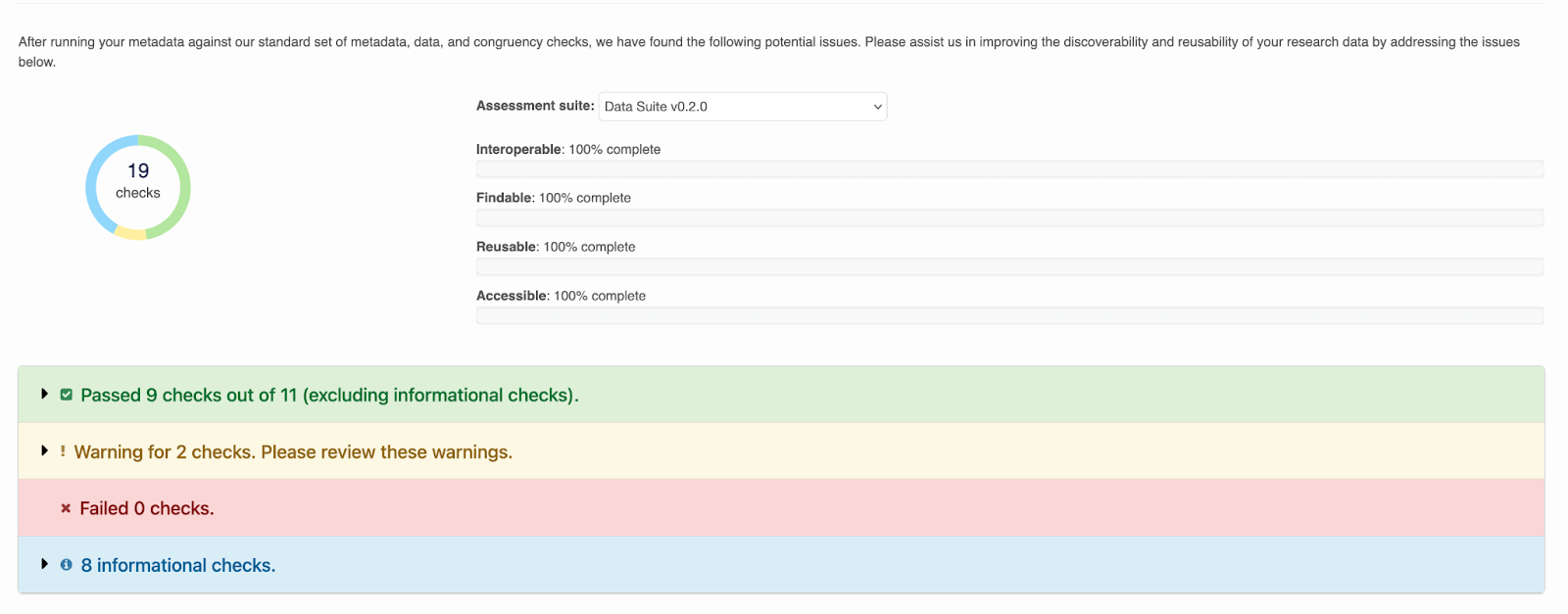
Example of automated data quality assessment report at the Arctic Data Center.
Learning Through Practice and Collaboration
As in previous years, the course combined instruction with hands-on practice. Instructors coded along with participants during live sessions, then paused to give time for work in small groups or pairs. Practice exercises allowed participants to apply what they had learned and work through problems on their own. Instructors were available throughout the course to help troubleshoot issues, which helped participants stay on track when errors arose.
The course also continued to support a range of experience levels. While all participants had some familiarity with programming, their confidence and experience with specific tools varied. The publicly available coursebook provided all code and answers for those who fell behind or weren’t as familiar with programming, allowing the course to move at a steady pace while still meeting individual needs.
Opportunities for interaction remained an important part of the training. Small group exercises, paired activities, and breakout discussions gave participants space to share ideas and learn from one another. These conversations often highlighted common challenges, such as organizing data, managing code, or building reproducible workflows. Recognizing these shared experiences helped create a more open learning environment and encouraged participants to continue developing these skills after the course.
Bringing It All Together
By the end of the week, participants were combining multiple data science skills into complete workflows. They worked with data, created visualizations, and produced reports that could be shared online and reproduced by others. This progression from individual tasks to connected workflows is a central goal of the training. While every project is different, the course aims to provide a foundation that can be adapted across disciplines and research contexts.
At its core, this training is designed to support a clear and consistent approach to working with data. By combining technical skills with practical application, the course helps researchers build workflows that are organized, transparent, and easier to reuse.
Looking Ahead
The Arctic Data Center’s training program has continued to evolve over time, shaped by participant feedback and the changing needs of the research community. Each course builds on previous iterations, incorporating new topics and refining how core ideas are taught. This year’s training was no exception, and participant engagement and thoughtful feedback continue to guide how we improve and adapt these offerings.
At the same time, we are navigating a significantly tighter funding landscape. Like many programs, we are being asked to do more with fewer resources, and this limits what we are able to offer. In the coming years, we anticipate scaling back to a single course offering annually. While this represents a change from past capacity, it in no way reflects changes in demand and interest. Based on the size of our course applicant pool and on the strong positive feedback we received from participants, it’s clear that demand for these training workshops remains high and they provide a valuable service for the community.
We see this moment not only as a constraint, but also as an opportunity to highlight the importance of sustained investment in data training for Arctic research. The continued interest in these courses, and the many ways participants apply and share what they learn, speak to their broader impact. Course materials will remain openly available online, extending their reach and supporting ongoing learning and reuse well beyond the classroom.
We are encouraged by the enthusiasm and commitment of this community, and we remain hopeful that, with continued support, we will be able to expand these offerings again in the future. Thank you to this year’s participants for their engagement and feedback, which help ensure that these efforts remain relevant, responsive, and impactful.
Written by Nicole Greco
Community Engagement and Outreach Coordinator