Origins and Inspirations
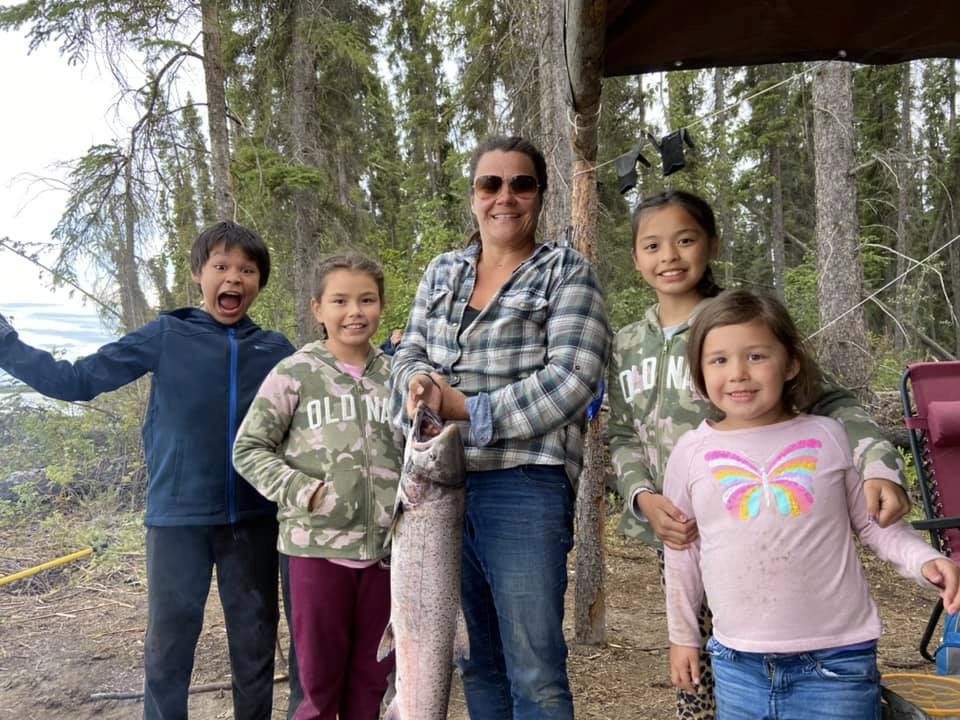
Jessica Black and family at fish camp.
Dr. Jessica Black, of Gwich’in Dena heritage from the villages of Gwichyaa Zhee (Ft. Yukon) and Toghotthele (Nenana), Alaska, was motivated by her upbringing along the Yukon River to pursue her current work in academia. She observed how Indigenous people and their Knowledge systems were often marginalized in research and local governance decision-making. These experiences inspired her to advocate for equity across the Arctic, and to uplift the Indigenous voices who carry vital knowledge of the Arctic ecosystems in spaces where they are underrepresented. She has become a bit of an expert on salmon, other wildlife, glaciers, spiritual knowledge, and so much more in order to holistically observe and analyze changes in the Arctic.
Courtney Carothers came to Alaska through an unexpected path. Originally pursuing a graduate program in Seattle, she secured a role at the National Oceanographic Atmospheric Administration (NOAA) that brought her to Kodiak Island as a research assistant for the federal fisheries agency. She always had a keen interest in equity, seeking to understand why certain policies were dispossessing fishermen of their fishing rights. Driven by her desire to address these inequities, she was welcomed by Sugpiaq elders who took her in and shared their lives, love, oral stories, and family with her. This experience as a young student established a deep sense of responsibility to advocate for these social and cultural dimensions of fisheries systems, and for fishermen around the world to have their voices represented in policy. She also works with communities across the Pacific, including the Hawaiian Islands, and remains committed to supporting vital human connections to fishing traditions.
Building a Living Record of Knowledge
 This project looked at the breadth and depth of Indigenous Knowledge around salmon science and governance, seeking to uplift that knowledge. It also analyzed the strengths and weaknesses of current fisheries management through the lens of Indigenous people. Part of the inspiration for indigenizing salmon management and governance derived from the work of the State of Alaska Salmon and People Project (SASAP) project, which similarly used a holistic and statewide overview of the relationships between Alaskan communities and salmon systems. This also helped inspire the Tamamta program, led by both Black and Carothers. Tamamta uses a co-production of knowledge approach to explore important topics in fisheries, marine, and ocean systems with graduate students through a fellowship model. All three projects similarly uplift Indigenous Knowledge and voices, centering them alongside or sometimes in challenge of western science frameworks. Furthermore, this project fostered a mutual recognition around core Indigenous values around stewardship and caretaking, with sharing being acknowledged as a fundamental principle of fisheries governance.
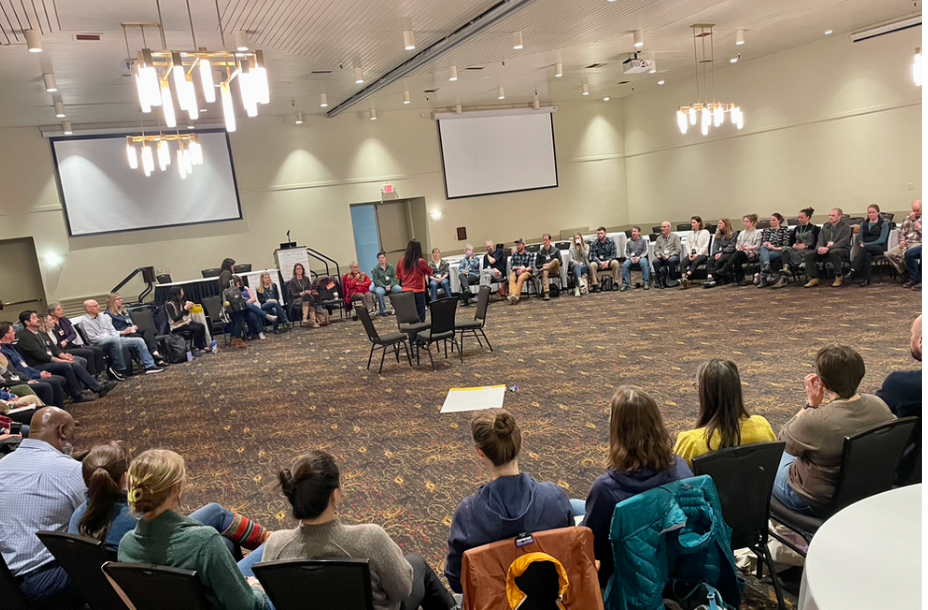
Racial equity dialogue at the American Fisheries Society, Alaska Chapter, Fairbanks.
The creation of this dataset was prompted by the needs of Alaskan communities who value salmon, as well as a desire to capture and preserve the stories of people within those communities. Following an overwhelming amount of support from participants to share information from their interviews, the recordings will be published so that future generations may have access to this knowledge. This was an important part of the project’s legacy, as the shared Indigenous Knowledge and data it contains may help advocate for the future of salmon and communities dependent on the species. Black noted that her elders always encouraged her to keep her community in mind when pursuing research, and because of this, she has been committed to prioritizing accessibility and data sovereignty in this work.
This commitment is also personal for Black. She recalled a personal experience where she discovered oral stories from her great grandmother in a library that she did not know existed prior, but listening to them made her relieved and proud. This is what she hopes others will experience too – seeing and hearing from past family members, and feeling proud to know they fought for salmon and uplifted their communities. The interview transcripts and audio recordings can be found in the dataset hosted at the Arctic Data Center:
- Jessica Black, Janessa Esquible, Courtney Carothers, & Rachel Donkersloot. (2025). Indigenizing Salmon Management (ISM) Interviews (Alaska, 2019-2025). Arctic Data Center. doi:10.18739/A26M33596.
Community Engagement and Impact
Relationships were at the forefront of both of the project and dataset. Black’s connections to the Yukon River communities, the Yukon River Inter-Tribal Fish Commission, and the Kuskokwim River Inter-Tribal Fish Commission are all salmon advocates, and they formed the foundation of the project’s early partnerships. Carothers’ ties to Kodiak Island naturally formed the second group. While, co-author Rachel Donkersloot, who is from Bristol Bay and has long worked there, brought the third group. These three areas became the communities at the heart of the dataset. Indigenous students led an impactful role in this project, receiving mentorship and uplifting the voices and experiences of their communities.
Black and Carothers are working hard to ensure the impact of this dataset extends beyond academia and are thinking of ways to make the results engaging for local Alaskan audiences. They explained that the dataset contains a large number of transcripts that are in preparation to be permanently housed in the University of Alaska, Fairbanks library archives but linked to the Arctic Data Center dataset for visibility. Black envisions a museum exhibit where visitors can not only hear the Indigenous Person talking about the project, but also see them tell their story and create visualizations around the transcript.
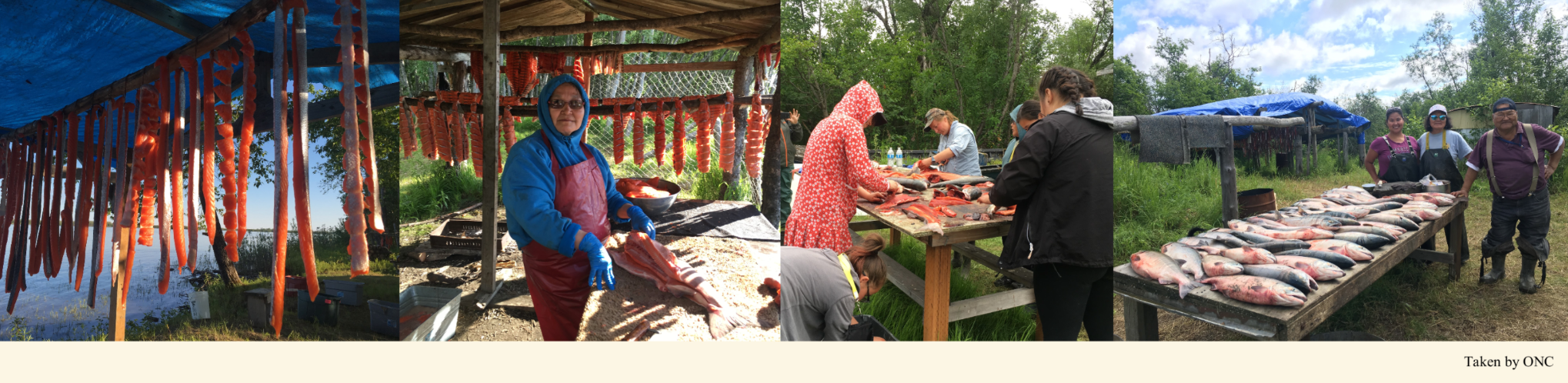
Vital salmon fisheries across the Kuskokwim region.
Ethical Research Rooted in Relationships
Much of Black and Carothers’ work is rooted in strong relationship building among their collaborators and partners. For this dataset, they worked with teams across Kodiak, Yukon, and Bristol Bay, Alaska, focusing on the four R’s (Relationship, Responsibility, Reciprocity, and Redistribution) throughout all project engagements. This framework helped shape how they approached the research, promoted equity, and continued to nurture meaningful relationships after the research was complete.
With redistribution, they ensured that they returned data and shared knowledge through helping teach younger generations. Woven into their sense of responsibility, their team ensured that every space they entered fostered positive energy and appreciation for all those involved, which can be absent in western science. They created a safe space for younger students and community members, and trained them in new processes and supported their professional growth.
Carothers noted their approach was different to common western science practices. In their work, their collaborators and partners have autonomy to choose what they want confidential and where they want their identity shared. Upon approval, their selected information was made public, which is different to her formal training in research where anonymity is the default. This work helps dismantle the conventions of western science, and places an emphasis on engaging with their partners in a more ethical and equitable way.
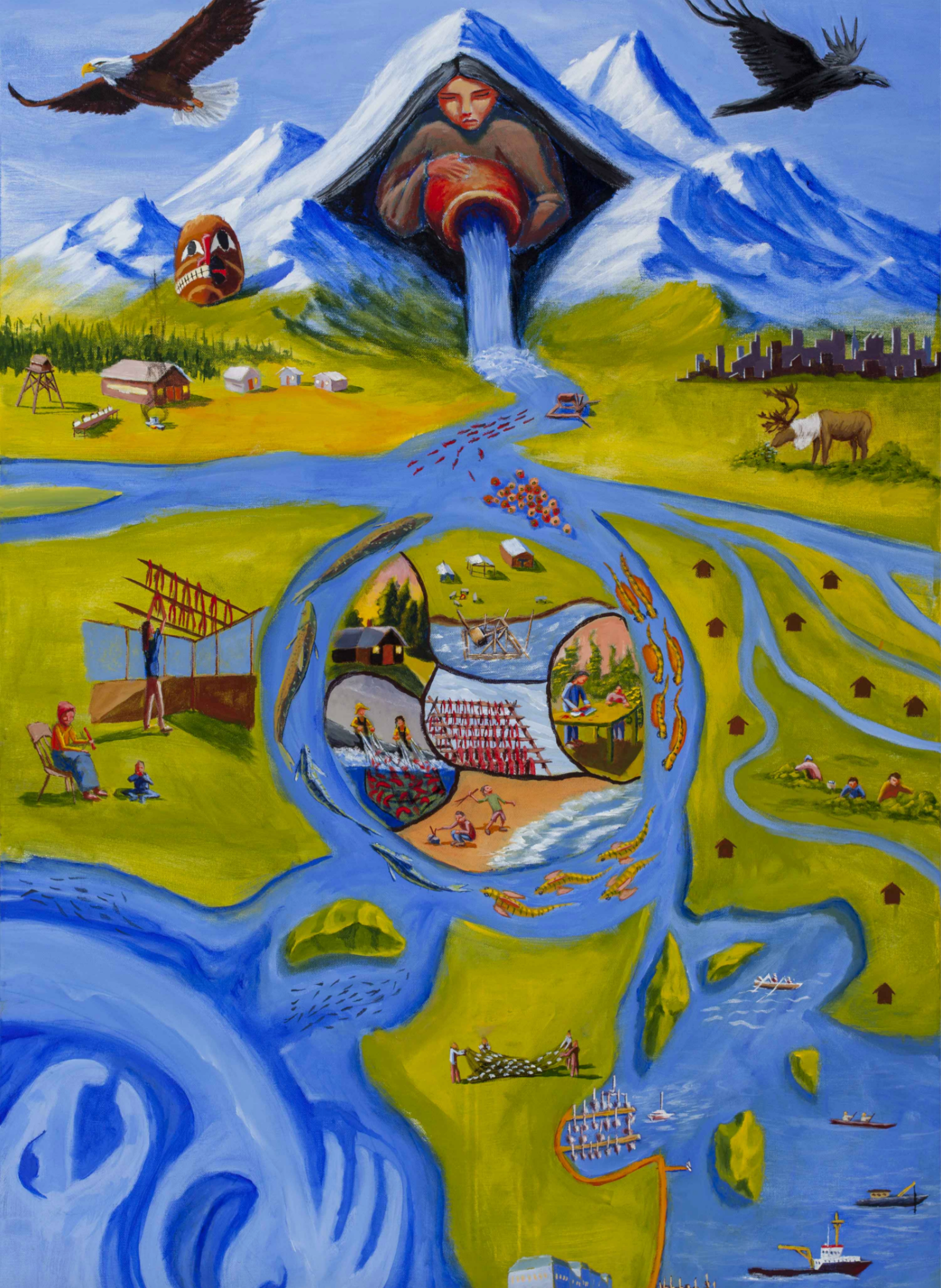
Painting representing the cultural complexity of the salmon system by Zack Martin (Ahtna).
Diversity Across Indigenous Knowledge Systems
When asked about any unexpected findings that emerged when exploring the relationship between Indigenous Knowledge and fishery governance processes, Black and Carothers said that a key point others may find surprising is the extent of diversity across Indigenous Knowledge systems. They emphasized that Indigenous Peoples are often incorrectly grouped as a homogenous population, when in reality Knowledge and practices vary widely depending on location, fishing practices, and historical context. For example, Black and Carothers note that communities in the Yukon hold very different Knowledge compared to other regions with different fisheries management practices.
They also highlight that, with over 200 federally-recognized tribes in Alaska, perspectives are far from uniform, even among groups with similar backgrounds. In this region, distinct experiences of colonization further shape how communities understand and engage with fisheries governance. Because of this variability, Black and Carothers stress the importance of avoiding generalizations and being mindful in how research findings are presented.
Building a Career in Arctic Research
For students and early-career scientists interested in Arctic research, especially those hoping to work with Indigenous communities, Black says the important first step is to invest time in building genuine relationships. Instead of arriving with predefined research ideas and seeking permission, it is more essential to spend time in communities, get to know people, and be transparent about your intentions. Black emphasizes that these conversations must be open and honest, without sugarcoating goals or expectations. She notes that while funding timelines and academic pressures can make this challenging, taking the time to build trust lays the foundation for meaningful, long-term collaboration.
Black wants researchers to know that these relationships should not be viewed as transactional or limited to the lifespan of a single project, but should be approached as ongoing, lifelong connections. She also notes that building relationships with a community means giving back to the community in tangible, non-transactional ways, whether that means listening to Elder’s stories, helping out with day-to-day needs , or simply showing up with respect and consistency.
Carothers also emphasized the importance of recognizing the broader history within these regions and how this intersects with research. She explained that many Arctic communities have experienced extractive or unethical research practices in the past, and that legacy continues to shape relationships today, so understanding that history and actively working to repair trust is an essential responsibility for anyone entering this field.
Gratitude, Relationality, and Meaning
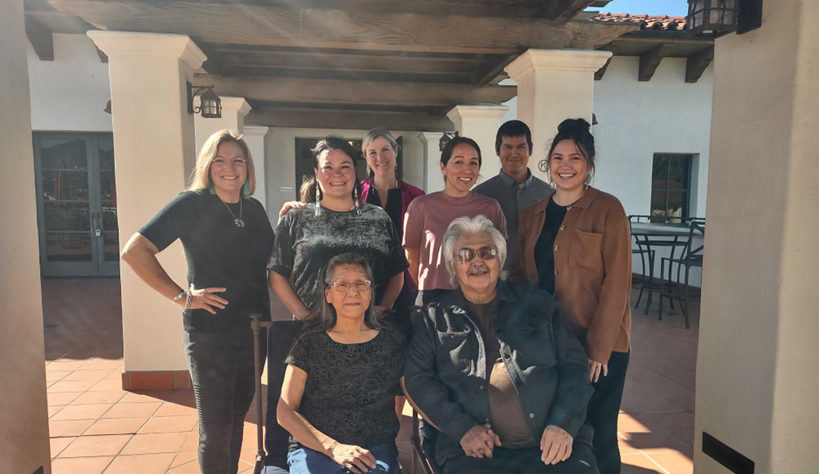
Indigenizing salmon management (ISM) writing retreat with Black and Carothers in attendance. Santa Barbara, CA.
When asked about the most rewarding aspects of their long-term collaboration and careers, Carothers and Black shared thoughtful reflections. Carothers values relationality and finds the greatest rewards in watching students take ownership of their learning and supporting each other. Seeing their connections to one another, the land, and the animals reassures her that they are on the right path and that positive change is happening.
Black expressed gratitude for working with Carothers and for their complementary strengths. She finds meaning in handling some of the harder challenges so students don’t have to experience them as much. In the classroom, she strives to create a space where everyone feels respected and uplifted. Salmon, an important relative, guides her purpose, and dedicating much of her life to honoring salmon reminds her to spend her time intentionally and in alignment with what matters most. Together, their reflections highlight a collaboration rooted in care, purpose, and connection.
Fostering Conversation and Collaboration Through the Arctic Data Center
Black and Carothers have collaborated closely with the Arctic Data Center and the National Center for Ecological Analysis and Synthesis (NCEAS) for many years, and these connections have played a key role in their careers. They emphasized the contributions of Matt Jones, PI of the Arctic Data Center, noting his ability to connect people and his thoughtful approach to data preservation and management. They also highlighted the support of Events Coordinator, Ginger Gillquist, as an essential team member, as well as the Outreach team, Angie Garcia and Nicole Greco, for their focus on community engagement and their dedication to creating social science resources.
Written by Angie Garcia and Nicole Greco
Community Engagement and Outreach Coordinators