
14 Minute Read
Research and Background
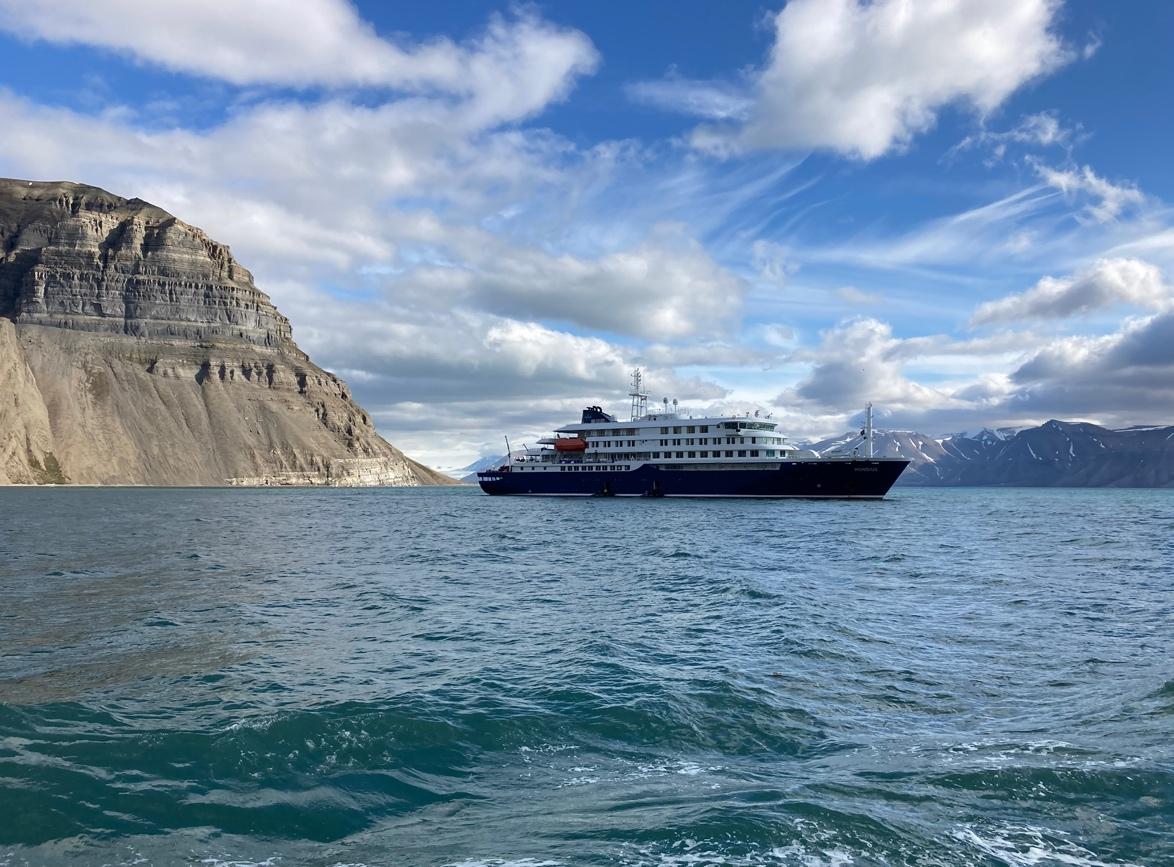
Arctic expedition cruise ship in Isfjorden, Svalbard, June 2022. Photo Credit: Martin Miles.
As sea ice retreats, cruise ships are reaching Arctic ports and routes that were once difficult to access, and the cruise tourism industry is rapidly growing. In Juneau, Alaska, a city that has roughly 30,000 residents, about 1.4 million cruise passengers arrived each year when this project first began, and today that number is closer to 1.7 million.
This kind of growth has raised questions that communities around the North were already asking: What is cruise tourism bringing to Northern communities, and what is it costing them? To further investigate, a team of Arctic researchers from the University of Colorado-Boulder, George Washington University, and the University of Alaska Southeast, set out to compare how cruise ships in the Arctic are impacting communities. They worked alongside local knowledge holders and decision-makers to determine what policies could enhance local adaptive capacities in response to the effects of the tourism industry. The answers to these questions helped different communities across the Arctic understand the impacts of cruise ships coming in and out of the area and their potential trade-offs.
The team wrote the proposal before the COVID-19 pandemic, and by the time it was funded, cruise ships had stopped sailing. However, when the cruise tourism industry picked up again, passengers were arriving in droves. This pause served as a rare opportunity where communities had the chance to compare what life looked like with and without the ships.
Part of this project also grew out of lived experience, for example by James Powell, who has lived in Juneau for about 40 years and served nine years on the local assembly. In the mid-1990s, helicopter noise from tourism was becoming a real issue for residents and Powell had to confront the issue and make a decision in the local assembly. Working with his colleague Cecil Stewart on ways to measure community sustainability, Powell eventually suggested that their colleague Robert Orttung apply for a National Science Foundation (NSF) grant to study cruise tourism’s impacts. They then assembled their team: Martin Miles, Robert Orttung, James Powell, Astrid Ogilvie, Seleni Matus, Sheryl Elliott, and Sean Asikłuk Topkok.
From 2021 to 2025, the team interviewed 123 individuals, virtually and in-person, across five communities in Alaska, Iceland, Norway, and Sweden. This dataset compares cruise tourism across Arctic and sub-Arctic communities in North America and Europe. To preserve participants’ anonymity, full transcripts and recordings are not publicly accessible. Instead, the published dataset at the Arctic Data Center includes a synopsis with the team’s central findings: communities emphasized balancing social, economic, and environmental impacts, with infrastructure and governance as keys to sustainable cruise tourism.
- Martin Miles, Robert Orttung, James Powell, & Astrid Ogilvie. (2026). Interviews on Impacts of the Arctic Cruise Tourism Industry on Nature, Commerce, and Culture in Northern Communities (2021–2025). Arctic Data Center. doi:10.18739/A2DR2PB5D.
Project outputs include these publications:
- Powell, J. E., Orttung, R. W., Anton Clavé, S., & Matus, S. (2026). Governance agency in a contested cruise destination: a legitimacy-evolutionary approach. Tourism Geographies, 28(3), 617–650. https://doi.org/10.1080/14616688.2026.2661058
- Powell, J. E., Orttung, R. W., White, E., Juni, R., Miles, M. W., & Ogilvie, A. E. J. (2026). Polycentric governance of cruise environmental impacts. Annals of Tourism Research Empirical Insights, 7(2), Article 100235. https://doi.org/10.1016/j.annale.2026.100235
123 Voices in Five Communities
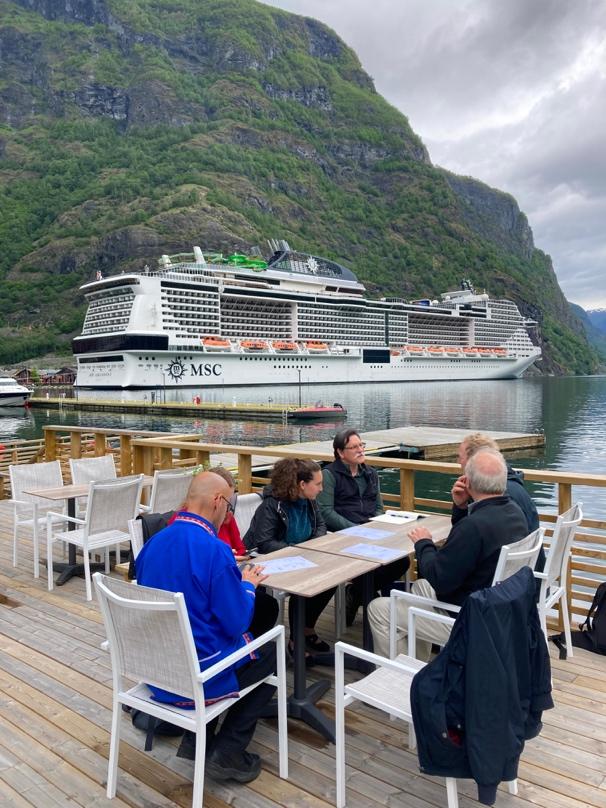
6000-passenger cruise ship and project team members in Flåm, Nærøyfjord, Norway, June 2022. Photo Credit: Martin Miles.
Each researcher had a long-standing tie to the locations they focused on, which helped build trust and understanding with participants. Miles lives part of the year in Bergen, and Powell lived in Nome in the 1980s and had studied Visby. That mattered, especially in Alaska, where researchers have a reputation of parachute science. Powell said, “You’re not real until about the fourth time that you visit a community.”
The team combined individual interviews, focus groups, and listening sessions, which let them hear from different groups separately. Powell and Orttung led conversations with 48 participants from Juneau, Alaska, 33 in Nome, Alaska, and 10 from Visby, Sweden. Ogilvie, who lived in Iceland for many years, interviewed 16 individuals from Akureyri, Iceland, and the nearby region of Mývatn, while Miles interviewed 16 individuals in Bergen, Norway.
This mix of these cities was deliberate, as the larger ports with long cruise histories such as Juneau and Bergen could offer lessons learned, while the smaller towns like Nome and Visby could show how communities are still learning how to respond to the impacts of the tourism industry. Together, this team identified the main economic, social, and environmental issues in each place, and then asked residents what mattered most, what the positives and negatives were, and how they felt about visitors.
Participants ranged from Indigenous community members to local politicians and port directors and regular citizens. The face-to-face discussions were crucial in capturing candid conversations between the researchers and the participants. The relationships built within these communities helped stakeholders be more open and honest, even when the conversations were uncomfortable. Ogilvie noted, “Sometimes we got very blunt comments,” and people were not always happy. However, hearing these experiences, unpleasant or not, helped the team to understand who was benefiting from cruise tourism, and who was not.
Same Ships, Different Experiences
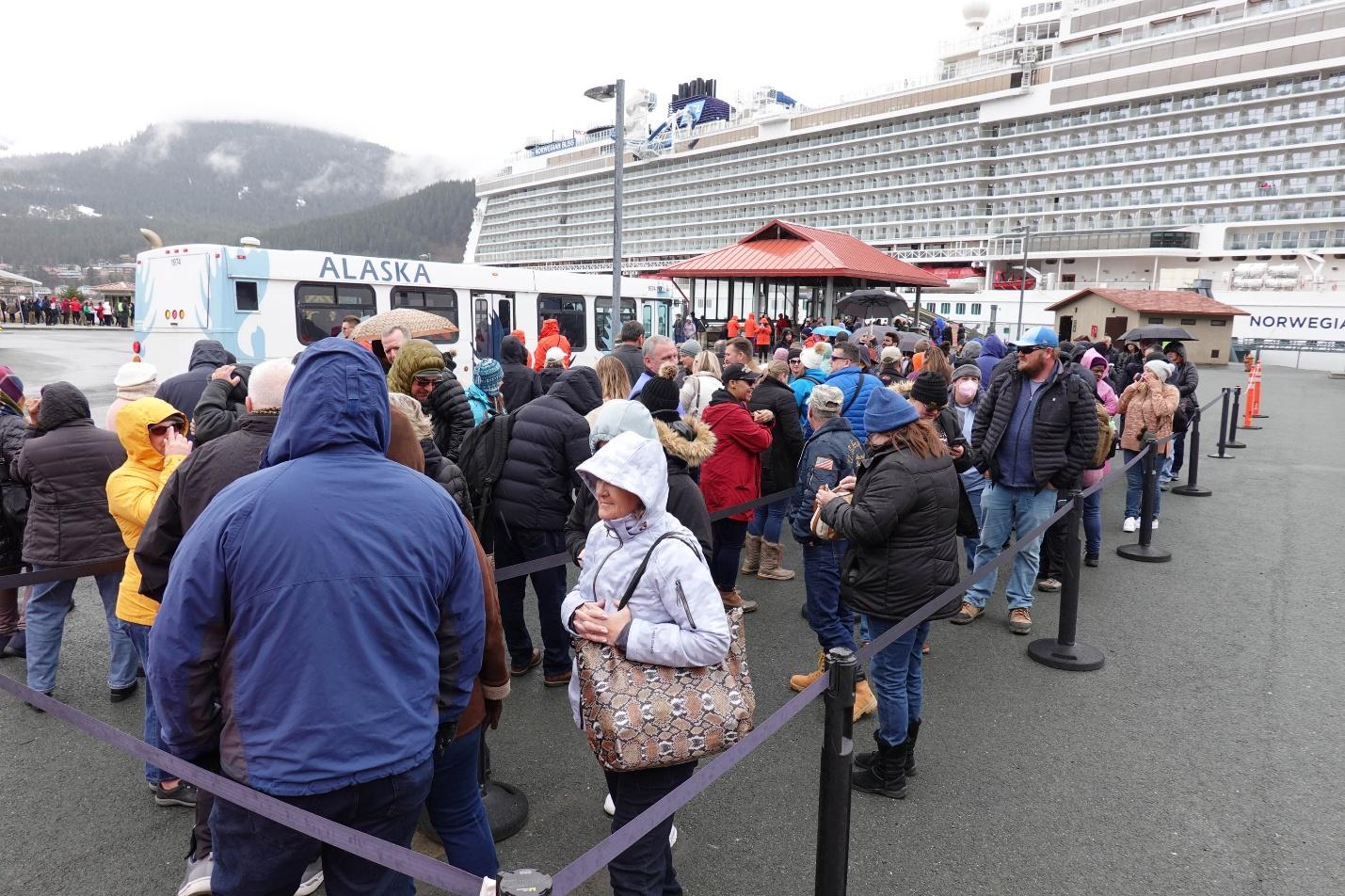
Cruise tourists waiting for a bus tour in Juneau, Alaska, 2022. Photo Credit: Jim Powell.
Across the five communities, it was notable that Europe and the U.S. are taking different paths in finding solutions to the impacts of the industry. In Norway and Iceland, communities worked towards cooperative solutions, while in Juneau the process has been more conflict-driven. This is partly because of differences in local governance. In Bergen, some of the residents opposed cruise tourism due to its greenhouse gas emissions. Other concerns seemed more focused on issues such as noise and overcrowding. However, Miles said residents in Bergen accepted that “cruise tourism is not going to be banned.” Instead, this community is prioritizing how to get a balance between advancing the economy and keeping the environment clean, and Bergen residents see their city as a model.
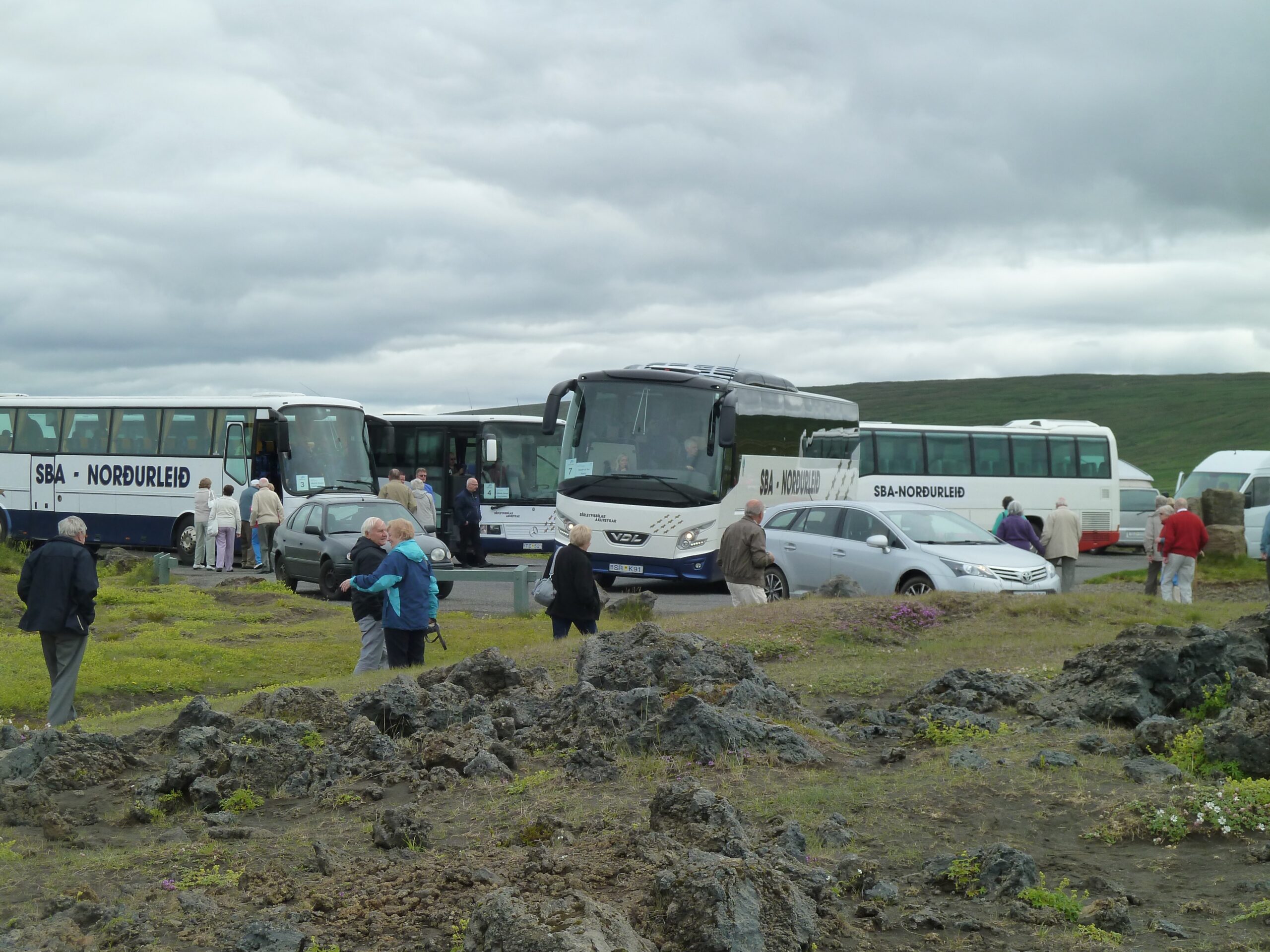
Buses bring tourists to ecologically fragile areas. This is by Goðafoss (“The Waterfall of the Gods”) near the Mývatn region. Photo: Astrid Ogilvie, 14 July 2013.
Many of the differences come down to who controls the port. In Europe, port directors have more control regarding the number of ships and visitors who come in and out of the area, where a cap number could be set if necessary. In the U.S., Orttung notes this is less feasible as cruise companies have more rights to use port facilities. For example, in Juneau there are multiple berths accessible for cruise ships to occupy. To ease cruise ship traffic, local political efforts in Juneau produced a memorandum to limit the number of ships on Saturdays. This effort was a step towards lessening the impacts of the industry, but Orttung noted companies find ways to get around it. However, there is still an underlying imbalance of powers between the industry and the government, which is built into the sector.
Looking Ahead
Looking ahead, Europe and Alaska appear to be moving in opposite directions. In Norway, Miles noted a push towards more coordinated regulatory policy. About 20 communities along the coast and fjords host cruise ships, each with their own rules on taxes, emissions, and limits. One community within a fjord protected as a UNESCO World Heritage site can require zero-emission ships, and then a town a few kilometers away can build a berth outside this restriction zone. “That’s really no way to manage the impacts of cruise tourism,” Miles said. Therefore, a coordinated policy at large could help communities work towards mitigating effects of the industry.
In Alaska, Orttung noted, the trend was “the exact opposite.” In Juneau, ships dock downtown, where passengers can go offboard and explore the area with little regulation. The city had been working to manage the large influx of visitors. However, in the last year, an Indigenous organization set-up a new port nearby on its own land, which will be managed by them. This assertion helps them choose how the land is used and also regulate the coordination of visiting passengers. Nearby residents, including Powell and his neighbors, have been organizing to understand what it will mean for them.
An NNA-Collaborative Project
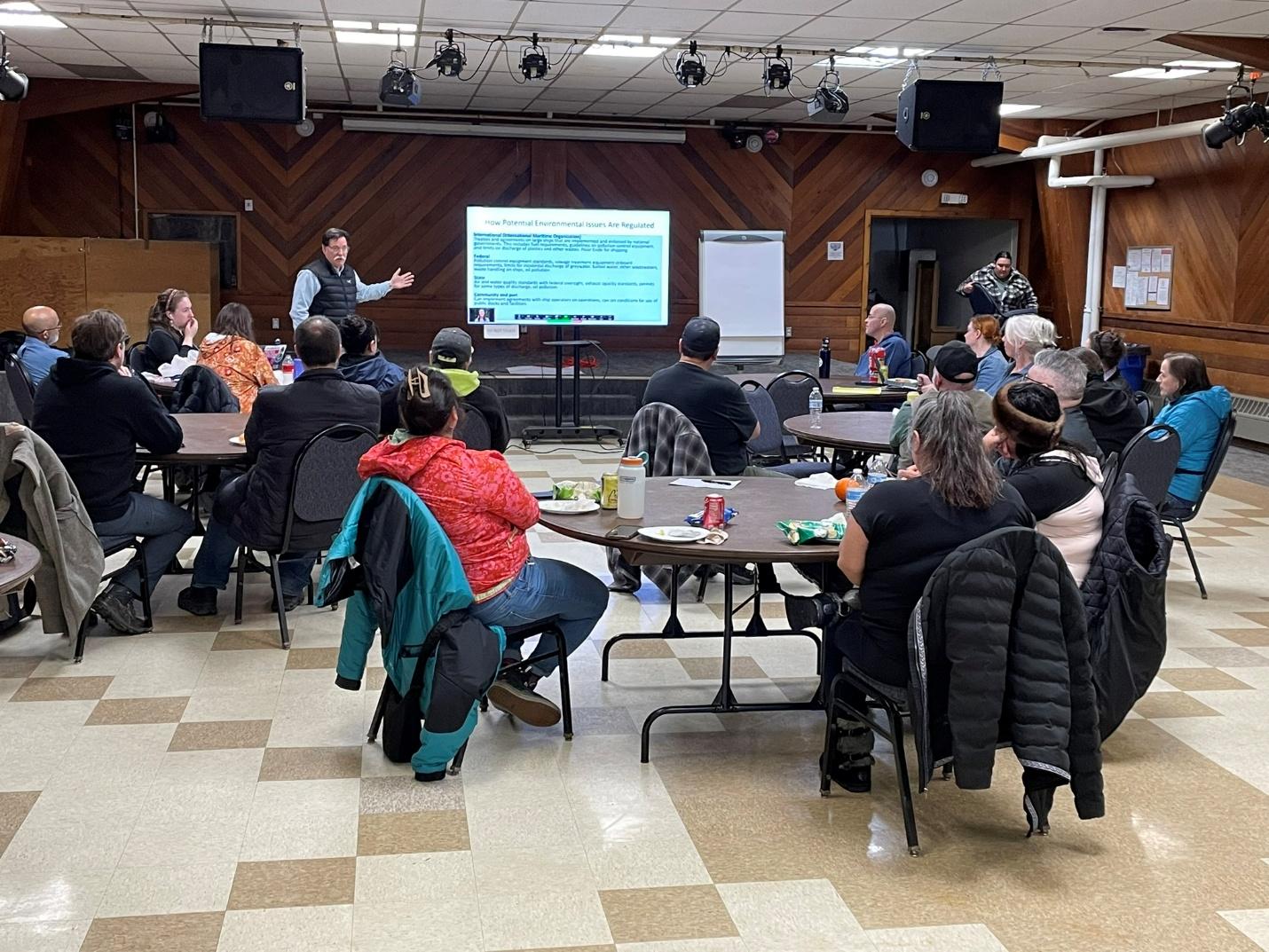
Nome workshop with locals 2024. Photo Credit: Robert Orttung.
The project was funded through the NSF’s Navigating the New Arctic (NNA) program as a collaboration across three universities. For all of the researchers, collaboration was the highlight of the work. Each researcher provided their own background and disciplinary expertise, and their combined research has shown how the changing Arctic landscape is reshaping tourism itself.
For Powell, cruise tourism shares something similar to the mining and fisheries industry: a power imbalance between outside interests and local communities. However, tourism is more broad in its impact. Ships bring more noise, air and water pollution, capacity, and pressure on local communities to sustain visits from large ships. Not only that, but these impacts overflow into other parts of their livelihoods. Powell uses the example of a recent hospital visit, where a nurse noted the emergency room had seen about 15 patients, mostly from cruise ships that day. An anecdotal example from Iceland suggests that approximately 10% of daily ER visits are by cruise ship passengers.
Comparing communities at different stages, from Juneau to Nome, is paying off because they are able to learn from each other. For example, Nome, which is just beginning to host cruise ships, can learn from Juneau which has decades of experience. After the team recommended that Juneau develop a comprehensive tourism plan, city leaders are in discussion to create one. In Visby, local officials lacked authority to charge a per-passenger fee like the one implemented in Juneau. However, their regional governance in Gotland is now considering adopting a new tax per passenger in order to pay for basic facilities such as public restrooms. Comparison of these communities showed that they are all facing similar impacts under different laws, and they all have something to learn from one another. Their team has a second paper comparing how international, national, regional, and local rules address impacts on air, water, and noise (Powell et al., 2026).
The Arctic Data Center’s Helping Hand
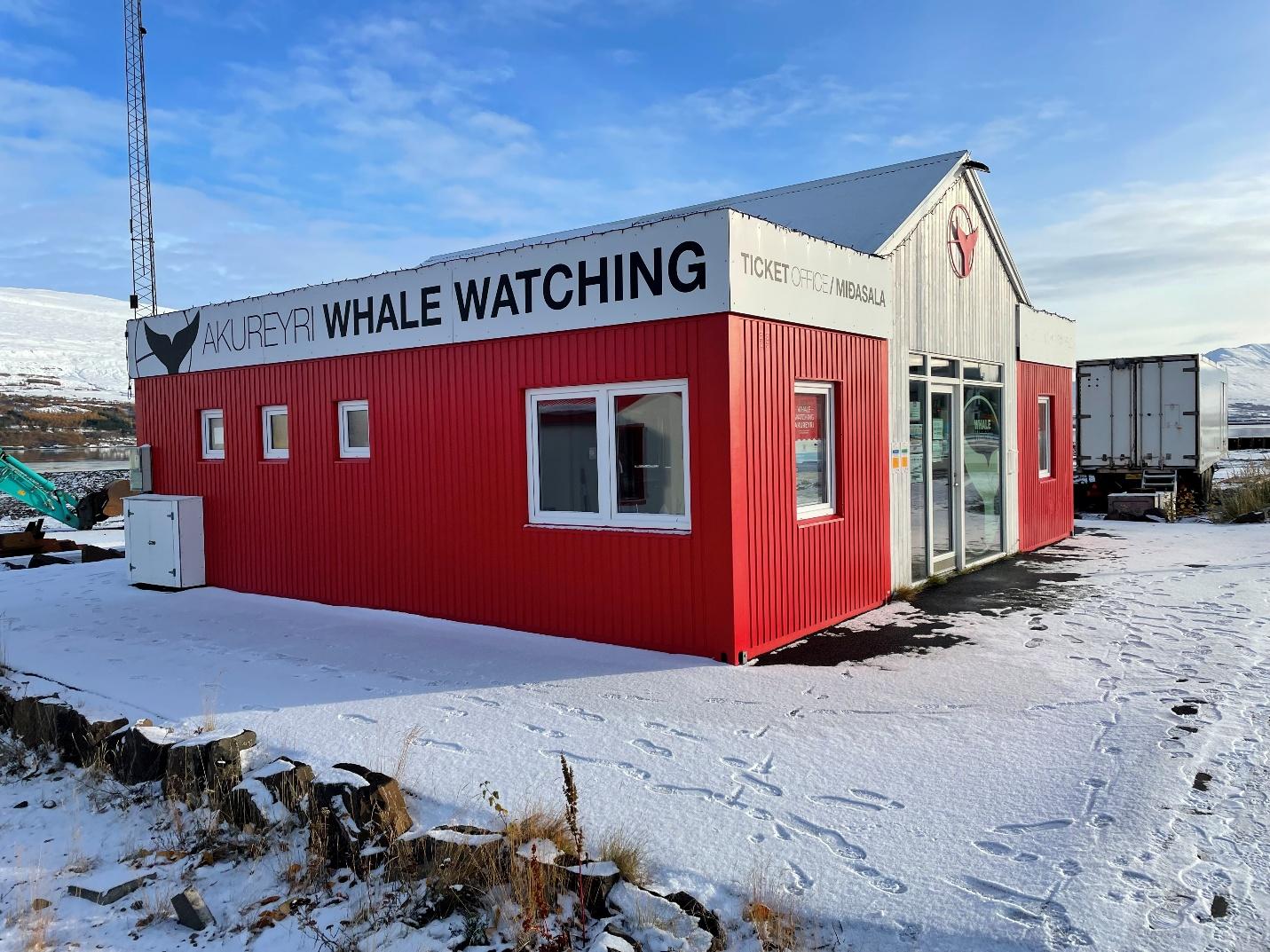
Akureyri Whale Watching 2023. Photo Credit: Robert Orttung.
The project team archived their dataset with the Arctic Data Center, and our web-based data submission editor and data-curation support facilitated the process. Miles noted that having guidance available made a real difference, and access to other similar datasets helped their team compare their work. Orttung highlighted the value of data science training programs, and recalled time spent at the National Center for Ecological Analysis and Synthesis (NCEAS) learning to work with data.
Since the heart of this project included candid conversations and deep discussions, protecting the privacy and confidentiality of participants was a priority throughout this research. Removing the names of the participants was not adequate privacy as some of these communities are small and people have specific jobs. Therefore, the published synopsis lets other researchers learn from the study’s design and findings while protecting the people behind them. Having other datasets in the repository to compare is extremely important and helpful when working with sensitive data. Not only that, but having regional data from the Arctic in one centralized repository helps everyone learn and see where more opportunities for science lie. It is also important to note that this dataset is part of our social science collection and is accessible via our social science data portal, providing more exposure to other social scientists. Explore similar datasets in the Arctic Data Center’s Social Science Data Portal here.
Advice for Future Scientists
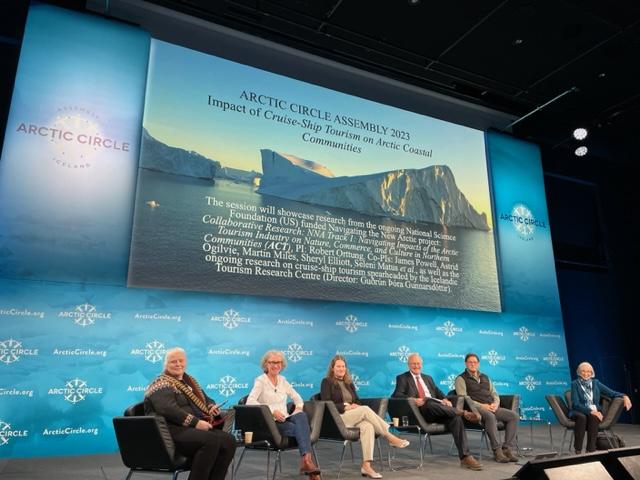
The research team presenting results at the Arctic Circle Assembly in October 2023. Photo Credit: Zoe Garbis.
Most of the researchers on this team echoed the same sentiment: Take advantage of vast resources and available opportunities. Miles highlights the value of physically visiting the area you’re researching, and how this could elevate your fieldwork or research experience. Additionally, taking advantage of geospatial tools and artificial intelligence (AI) that could help with solving new research issues. Orttung mentions, “If you have the chance to live there… it’s quite eye-opening.” They both emphasize the importance and value in continuing to invest in Arctic research, and learning from the changes in the region.
Written by Angie Garcia
Community Engagement and Outreach Coordinator