
5 minute read
When you upload or update a dataset at the Arctic Data Center, there is a lot happening behind the scenes. Your data files, metadata, and the connections between them all need to be saved correctly and kept in sync. Most of the time, this happens without much thought. But when something goes wrong, the consequences can be frustrating: an upload may fail, a dataset may not save as expected, or work you have just completed may be lost.
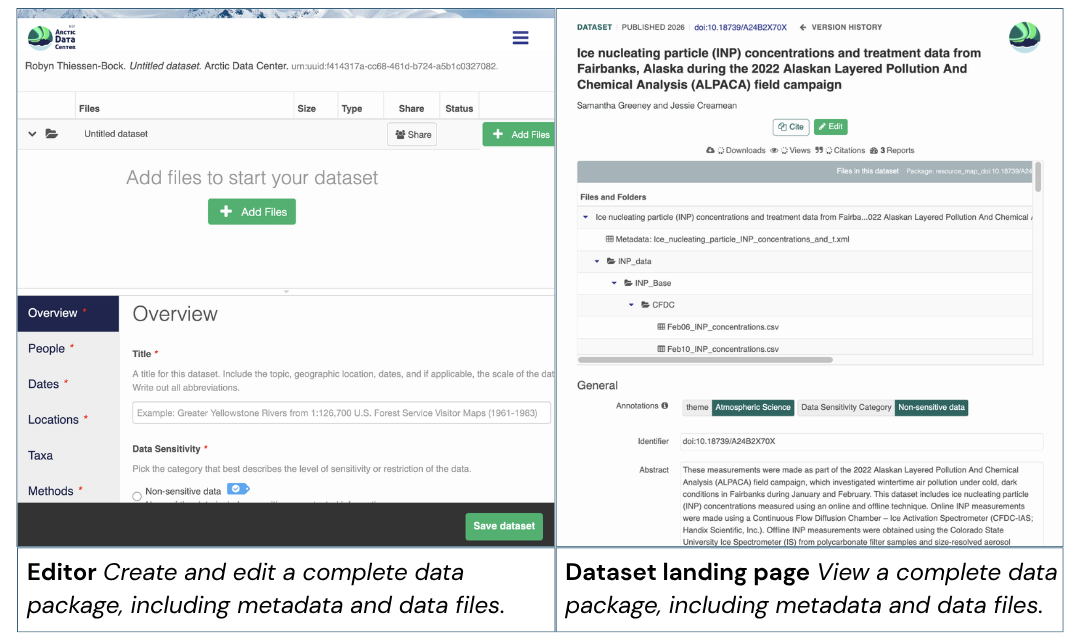
Recent improvements to the software that powers the Arctic Data Center, MetacatUI, are designed to make these processes more reliable. The updates focus on how MetacatUI manages data packages and how it handles saving, errors, and recovery. Read the full release notes here.
Why Publishing a Dataset Is More Complicated Than It Looks
A dataset is more than just a collection of files. At the Arctic Data Center, a data package includes metadata, one or more data files, and a Resource Map that describes how those pieces fit together.
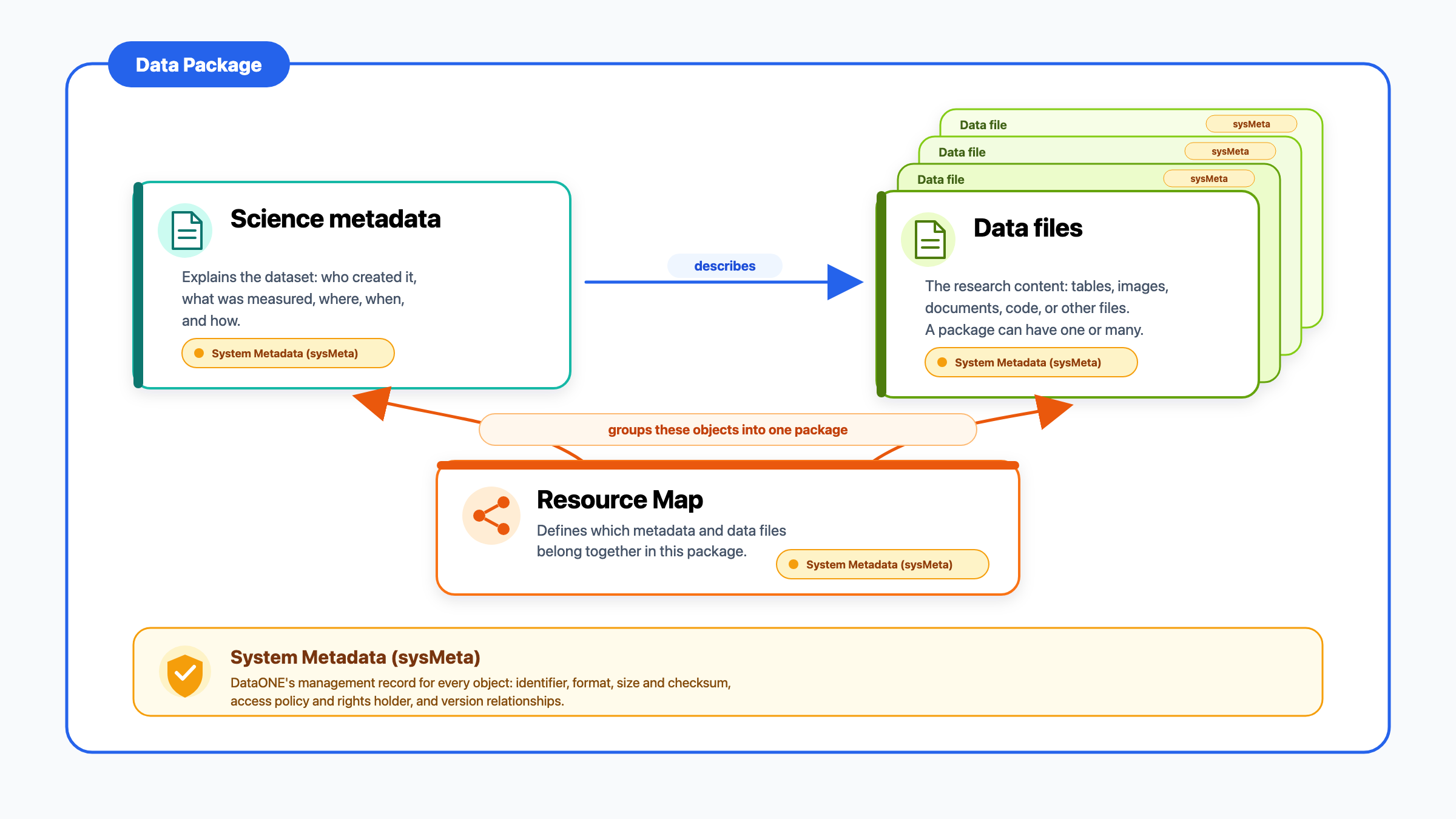
As MetacatUI’s data package capabilities have grown, the supporting infrastructure has expanded across several parts of the application. This refresh brings those responsibilities together, creating a more consistent foundation that is easier to maintain and better positioned for future development. It also strengthens how the application handles common challenges during data submission, such as interruptions during file uploads or metadata saves, helping ensure that data packages remain complete and that users can continue their work without unnecessary interruptions. These improvements make the submission process more reliable and provide a stronger foundation for delivering a smooth, easy-to-navigate experience for repository users.
A New Foundation for Data Package Management
To address these challenges, our software development team has substantially improved how data packages are represented and managed. The new upgrades give data packages a single central interface, with dedicated components responsible for loading packages, making changes, and recovering from interrupted saves. For researchers, much of this change might feel invisible. Without needing to understand how the different pieces of a dataset are coordinated, researchers should be able to focus on preparing their data and metadata while the software handles the underlying complexity.
What Happens When You Click “Save”?
When you save a dataset, MetacatUI has to make sure that all the changes you’ve made, including new files, updated files, and metadata changes, are successfully recorded. The updated software coordinates these steps more carefully and checks for problems along the way. If a network interruption or other error makes it unclear whether a change was successfully saved, the system can check the repository before deciding what to do next. This improvement reduces the chance that a dataset will be left only partially saved or that the system will incorrectly assume a change failed.
If Something Goes Wrong
Technical problems can interrupt a data package upload for a variety of reasons. The upgraded software now includes improved recovery capabilities for these situations. When possible, an interrupted save can be recovered rather than requiring the researcher to start the process over. The system can verify the files and metadata involved and use the information stored during the submission to help complete the save.
For researchers, this means less risk of losing work because of a temporary technical problem.
A Better Experience for Arctic Data Center Users
The goal of these changes is not to add new steps for researchers. Instead, these improvements strengthen processes that researchers already rely on when submitting and updating datasets. With more coordinated save operations and dedicated recovery capabilities, MetacatUI is better equipped to handle the complex interactions involved in managing a dataset. The improvements are largely behind the scenes, but are intended to make a noticeable difference when something unexpected happens.
These improvements strengthen the foundation of the Arctic Data Center, helping ensure that researchers can spend less time worrying about whether their dataset is saved correctly, and more time focusing on the science.