Read time: 8 mins
Background and Research
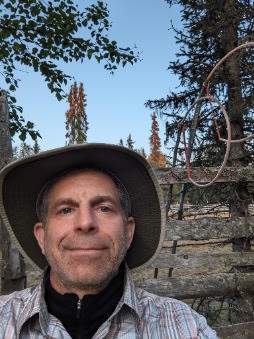
John Ziker at a reindeer coral in northern Finland. Photo Credit: John Ziker, 2023.
Since 1992, Dr. John Ziker has worked in the Arctic, beginning in Siberia and later expanding to other Arctic communities in Europe and North America. As an anthropologist, Ziker studies how decision-making, the environment, and community resilience intersect in human populations, a perspective that is essential in working with small, remote communities in the Arctic. He began with ethnographic research among Indigenous communities in northern Russia. There, he explored what sustainability looked like and meant for people whose relationships with the land were being reshaped by geopolitics. During his graduate research, the Russian government was allotting land to native “communes” (obshchinas) for the pursuit of traditional activities after the Soviet collapse. Ziker wrote more about developing property regimes and worldview in his monograph Peoples of the Tundra (2002, Waveland Press), and other papers.
These dynamics were not unique to northern Russia; they appear in many other Arctic communities, where people’s relationship with the land is deeply intertwined with their cultural values and ways of life. Through this experience, Ziker came to understand that researchers visiting Arctic communities need to engage not only as scientists, but as people present in the community and on the land.
Adaptation and Collaboration Amid Change
This dataset comes from a project funded by the National Science Foundation’s (NSF) Navigating the New Arctic program, one of NSF’s 10 Big Ideas. The project, Interactions of natural and social systems with climate change, globalization, and infrastructure development in the Arctic, examines how natural, social, and built environment systems respond together to environmental stressors.
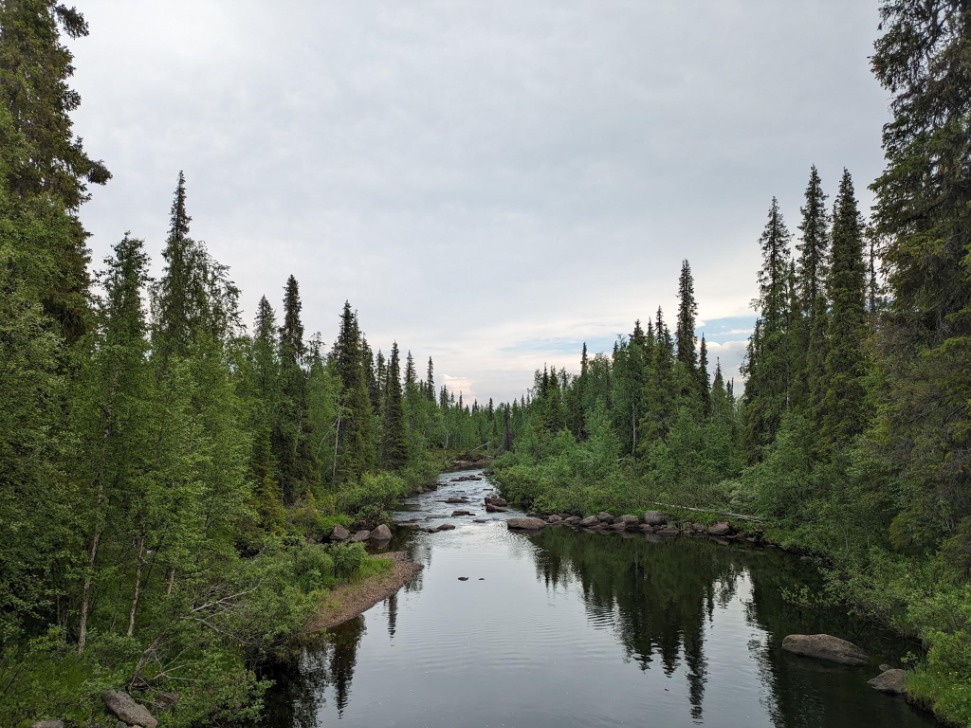
Mature forest in northern Finland. Photo Credit: John Ziker, 2023.
The project was originally planned to take place in the Yamal Peninsula in northern Russia, but Russia’s invasion of Ukraine in February 2022 forced the team to relocate.
Ziker and his colleagues had connections to the University of Lapland in Finland, which became the project’s new base. The nearby Sattasniemi reindeer herding cooperative naturally became a key partner in designing the methods and creating the dataset. Together, researchers and herders found research topics that were of interest to herders and for which the research team had expertise. A number of research questions developed that called for understanding which landcover types reindeer preferred at different times of the year. As a starting point, the team utilized a typology of 19 different land cover types, provided by the Finnish Institute of Natural Resources (LUKE).
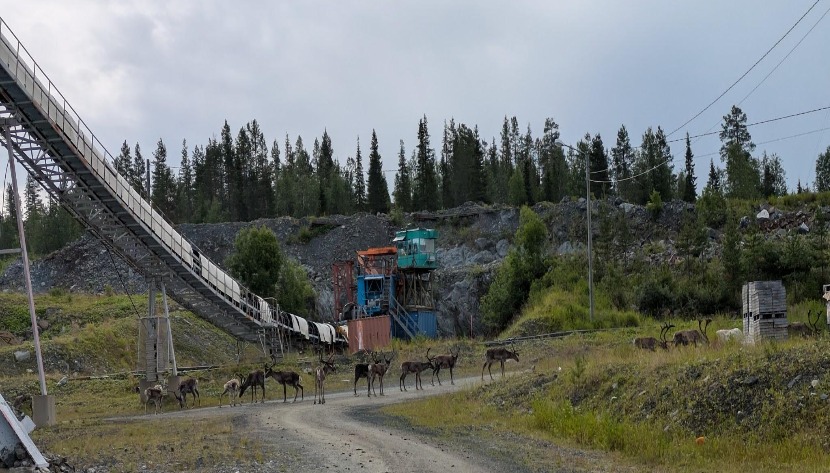
Paused mining operation in northern Finland. Photo Credit: John Ziker, 2023.
The anthropology team within the project used a series of rank-order questions delivered on an anonymous survey to reindeer herders to understand seasonality of reindeer land use, a simple yet effective method given available resources. To learn more about the land cover types and the herders’ ranking, explore the dataset archived at the Arctic Data Center:
- John P. Ziker, Viola Ukkola, Florian Stammler, & Iida Melamies. (2026). Reindeer Herder Rank Ordering of Land Cover Categories, Lapland, Finland, 2025. Arctic Data Center. doi:10.18739/A24J0B06Z.
In relation to the data, this research team has published their own data portal that includes all related datasets and publications:
Knowledge Co-Production in Action
Community engagement is central to knowledge co-production, and this project shows it in practice. From relocating the original study area to redefining research objectives, researchers and herders worked side by side. That collaboration extended from fieldwork to reindeer round-ups, and combining scientific questions with the herders’ own questions and expertise. One key takeaway Ziker noted was that local people, Indigenous or not, are invaluable partners for researchers, as they work the land first-hand and know the environment best.
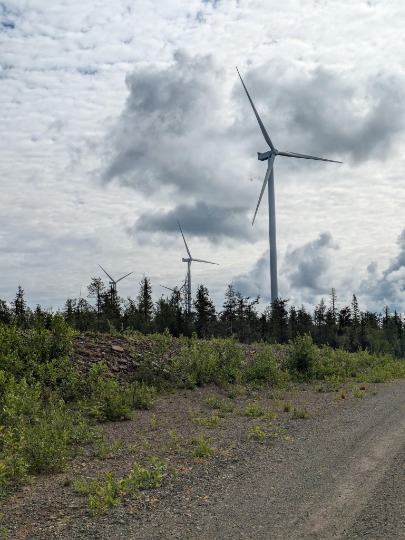
Windpark in northern Finland. Photo Credit: John Ziker, 2023.
Seasonal Patterns and Surprising Discoveries
The survey results revealed some unexpected patterns in how different land cover types were ranked across seasons, with higher rankings reflecting where herders perceived reindeer spent the most time. Bogs, a type of wetland, typically received moderate rankings throughout the year, but ranked first during the summer. While bogs are not the greatest source of nutrition for reindeer, they are generally open areas where wind can help push mosquitoes away, giving reindeer relief from the insects which pester them, Ziker noted. Despite seasonal differences, approximately ten land cover types maintained consistent rankings throughout the year, highlighting both the seasonal variation and the recurring patterns in the survey results and land cover analyses. These findings helped the research team parameterize models being developed to answer questions posed by the reindeer herders.
Making Space for Reindeer Herding
In Finland, the Reindeer Herding Act establishes a framework for reindeer management, including limits on the number of reindeer in each district. Ziker emphasized the importance of working closely with the Reindeer Herders’ Association and ensuring that herders have a voice in interpreting the research results.
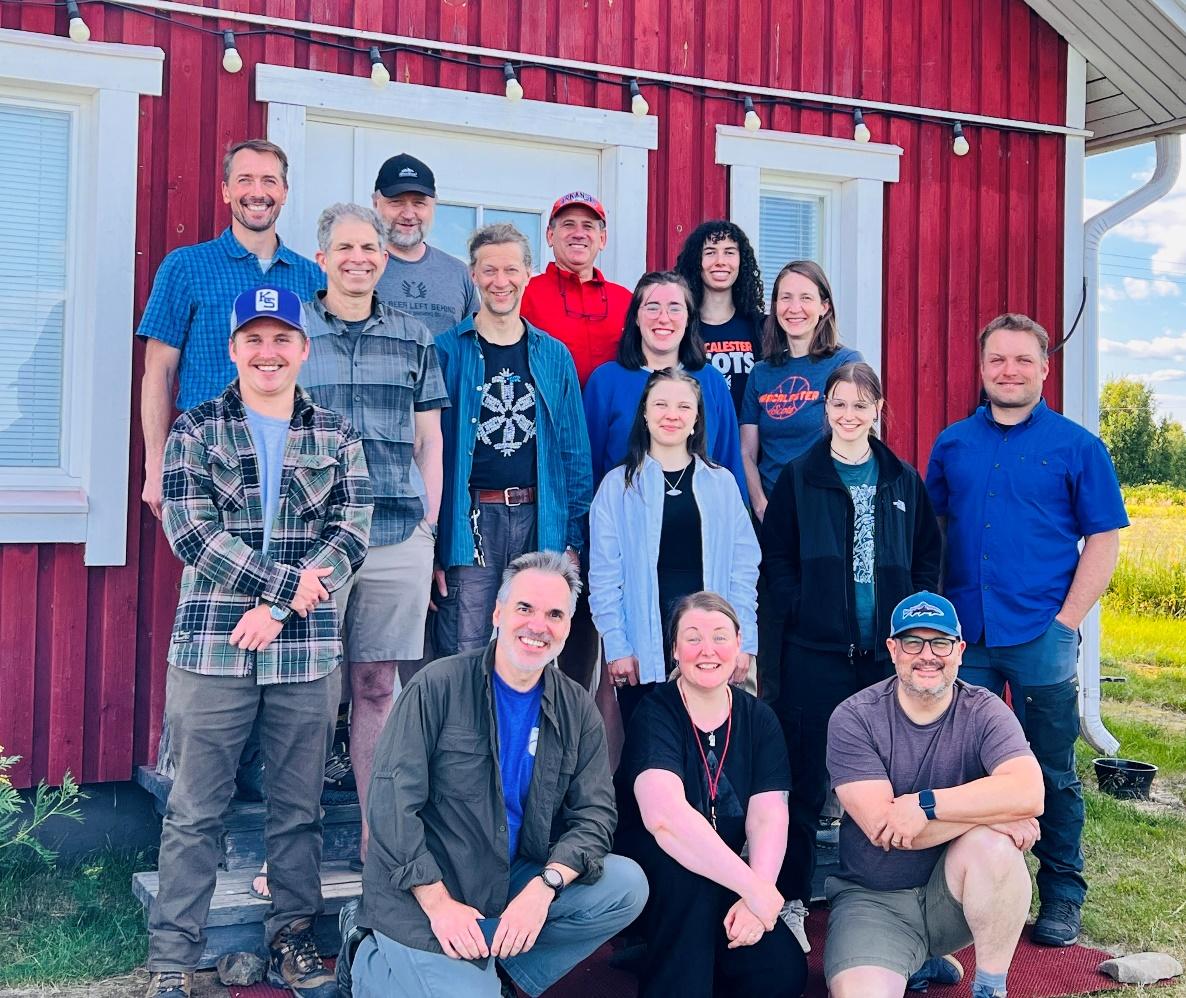
NNA Fennoscandia project team at a project meeting in northern Finland in July, 2025.
Research That Serves Northern Communities
For Ziker, one of the most rewarding aspects of Arctic research has been building relationships and trust with the communities and reindeer herding districts involved in the work. Ziker sees value in making the research data available, co-authoring papers with stakeholders, and building public trust in science while maintaining community sovereignty. Ultimately, producing research that is useful to local people is a central part of what makes his work rewarding.
Trust, Connection, and Community Engagement
For students and scientists interested in Arctic research, Ziker emphasized the importance of building relationships with the people and communities connected to their research. He noted that this can be particularly challenging for researchers who are not from the areas where they work, making networking, open-mindedness, and trust-building especially important skills to develop.
Ziker also highlighted the value anthropologists bring to research through their focus on real-world challenges being faced by communities. He pointed to the importance of leveraging connections with experienced faculty and researchers already engaged in community-based research. His advice underscores that working with communities requires more than conducting research in a particular place: it involves investing time in relationships and developing an understanding of what matters to the people who live there.
The Value of Thoughtful Data Stewardship
Ziker’s experience working with the Arctic Data Center helped him think more carefully about how research data are documented, organized, and shared. He recalled attending a data science training course through the Center as a valuable experience. Ziker mentioned that although the Arctic Data Center’s requirements are stricter than some other repositories, he found the submission process beneficial and it helped him consider how to design future research projects with data management and sharing in mind. It also reinforced the value of thorough documentation in making research data more reproducible and useful beyond the original project.
References:
- Ziker, J. P. (2002). Peoples of the Tundra: Northern Siberians in the post-communist transition. Waveland Press.
Written by Angie Garcia, Nicole Greco, and John Ziker (ORCID: 0000-0001-9059-5594)