
A Journey into Arctic Research
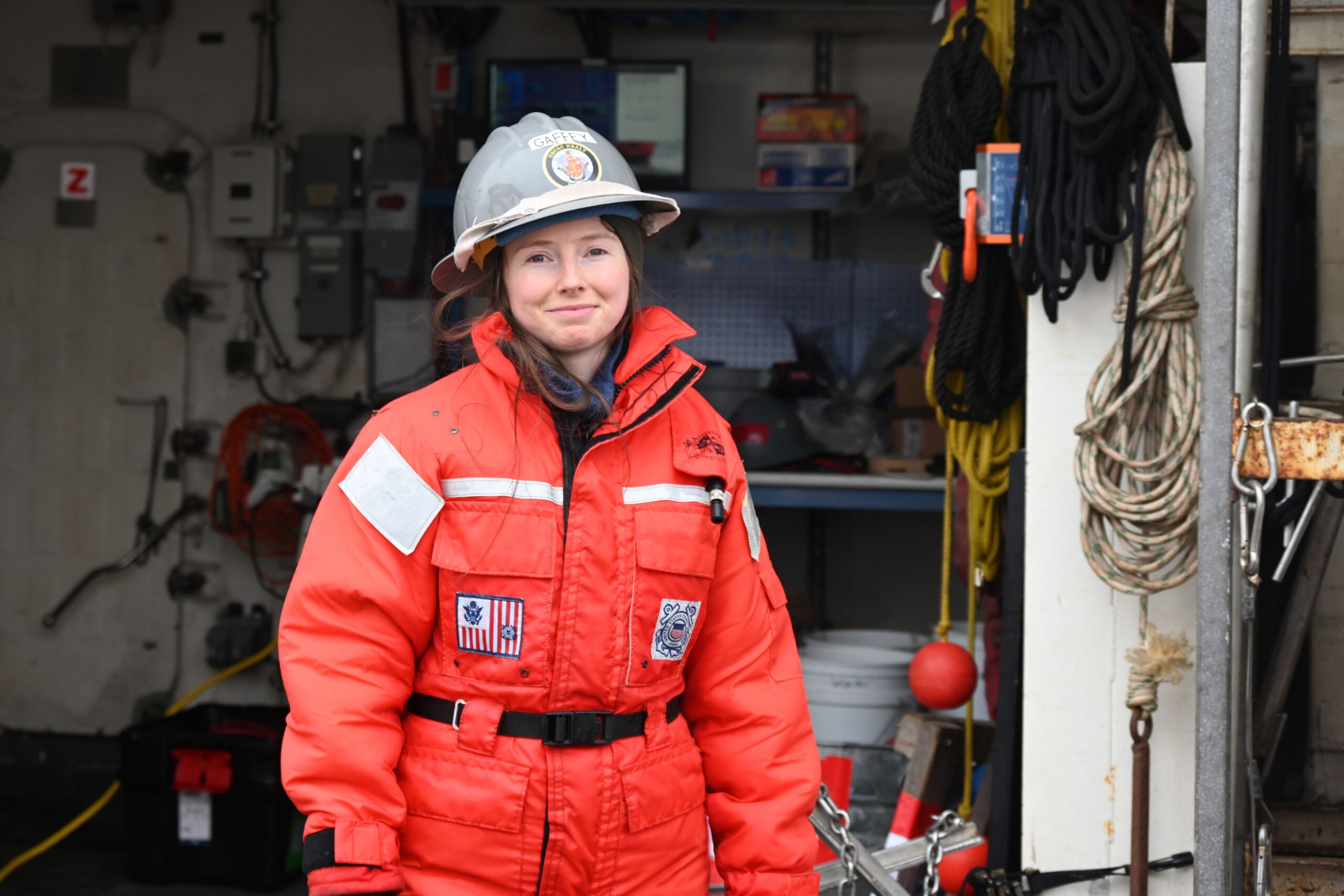
Gaffey smiles for a picture in between sampling stations. U.S. Coast Guard photo by Deborah Heldt Cordone, Auxiliary Public Affairs Specialist 1.
Growing up, Dr. Clare Gaffey viewed the Arctic through a rose-colored lens: a vast, pristine landscape of white and blue ice, thriving ecosystems, and minimal human influence. Yet, her path into Arctic research was anything but direct. After earning a Bachelor’s degree in Environmental Science and a Master’s degree in Geography from SUNY Albany where she studied interactions between spruce trees and their environment in New York, she pursued a PhD in Geography at Clark University. There, Gaffey joined the Distributed Biological Observatory, a long-term research program focused on monitoring marine ecosystems in the Bering and Chukchi seas.
As Gaffey began studying the Arctic firsthand, her perception of the region shifted. Rather than an untouched wilderness, she found an environment experiencing profound impacts from human activity. Recognizing the extent of those changes reinforced the importance of Arctic research and the need to better understand how the region is responding to a rapidly changing world.
Understanding the Microscopic Life that Sustains Arctic Ecosystems
At the center of Gaffey’s current research are phytoplankton, microscopic organisms that form the foundation of Arctic marine food webs. Changes in phytoplankton growth, abundance, and community composition can ripple through the ecosystem, affecting everything from nutrient cycling to higher trophic levels. Her research focuses on understanding phytoplankton growth dynamics in the Arctic Ocean, particularly as environmental conditions continue to shift.
Reductions in sea ice and other ongoing changes are altering the timing and magnitude of phytoplankton blooms, raising important questions about how Arctic ecosystems may respond in the future. For example, the rich ecosystem residing on and in the seafloor of the Bering and Chukchi seas is fueled by deposits of ice algae and phytoplankton. Changes in the timing of phytoplankton blooms can lead to more grazing by migratory water column species with less of this fuel reaching the seafloor. To better understand these dynamics, Gaffey combines information from satellite remote sensing, model outputs, and cruise-collected water and ice samples. Together, these data help reveal how environmental conditions influence phytoplankton communities and how those communities, in turn, affect their surrounding environment.
Capturing a Changing Ocean
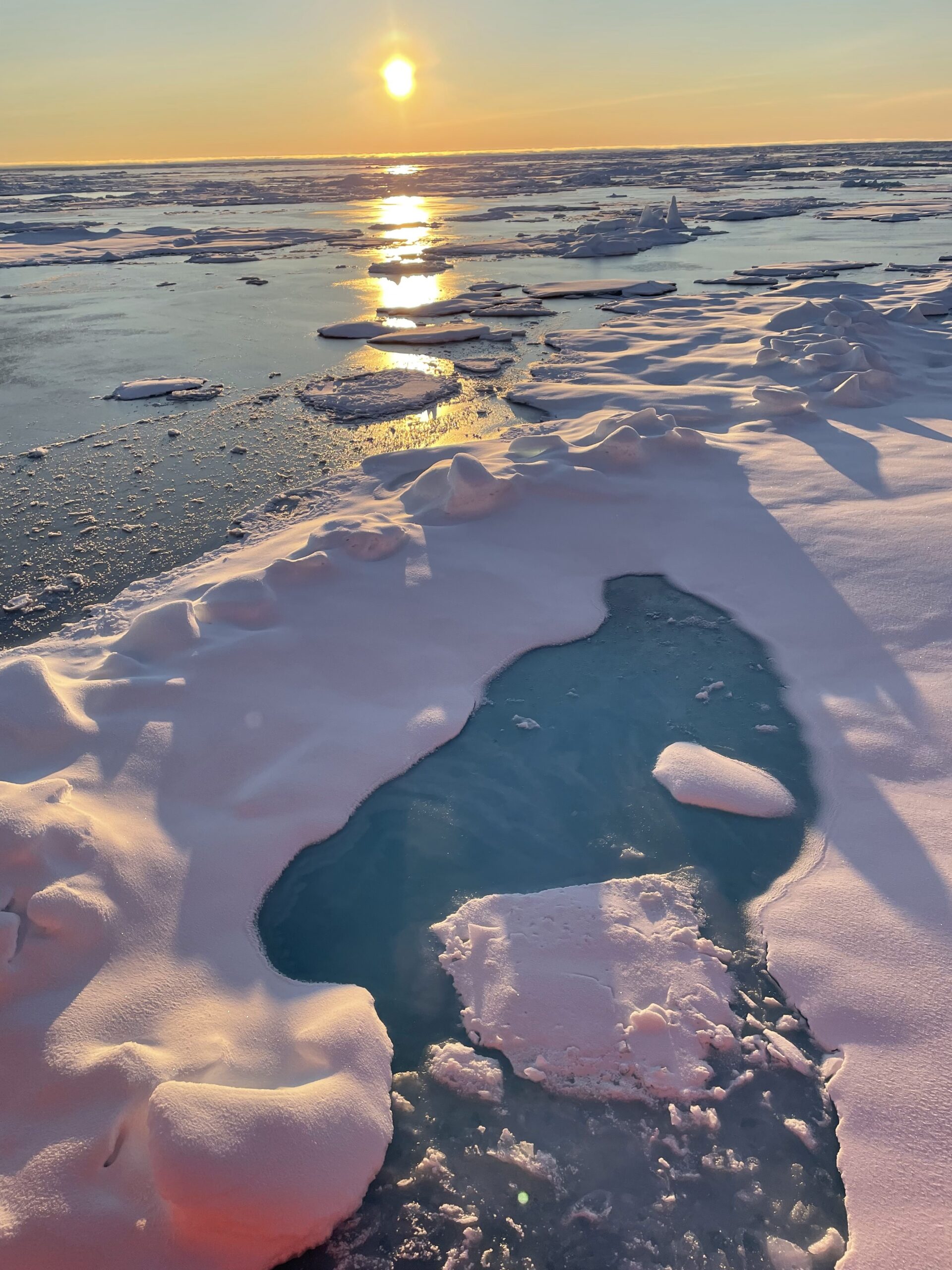
Sea ice on the Chukchi Sea, September 2022. Photo taken by Clare Gaffey.
The dataset highlighted here was collected during the Synoptic Arctic Survey, an international effort designed to establish a contemporary baseline of Arctic Ocean conditions. Conducted between 2020 and 2022, the program brought together researchers from multiple nations to gather hydrographic, biogeochemical, and biological observations across the Arctic. As part of the U.S. contribution to the survey, the United States Coast Guard Cutter Healy traveled from the Pacific Arctic to the North Pole in September and October 2022. The expedition provided an opportunity to collect a wide range of observations during a season that has received increasing scientific attention.
During the expedition, Gaffey also collected measurements of chlorophyll-a, a pigment commonly used as an indicator of phytoplankton biomass, as well as pheophytin, a product formed as chlorophyll degrades. The dataset also includes measurements of upper-ocean optical properties. Interest in these observations is tied to emerging evidence that late-season phytoplankton blooms are becoming more common in parts of the Arctic where sea ice has declined. By documenting pigment concentrations across a large geographic area, the dataset helps researchers examine how these blooms develop and persist as the region transitions towards winter. Both datasets are preserved at the Arctic Data Center for future access and reuse:
- Clare B. Gaffey, & Karen E. Frey. (2024). Phytoplankton pigments from discrete water samples collected from the rosette at specific depths, United States Coast Guard Cutter (USCGC) Healy, Chukchi Sea to Central Arctic Ocean, 2022. Arctic Data Center. doi:10.18739/A2TB0XX3S.
- Karen Frey, & Clare Gaffey. (2025). Optical measurements of light transmittance of the upper water column, United States Coast Guard Cutter (USCGC) Healy, Chukchi Sea to Central Arctic Ocean (2022). Arctic Data Center. doi:10.18739/A2XD0R056.
How Scientists Measure Arctic Phytoplankton Blooms
Collecting phytoplankton pigment data begins with seawater sampling. During the expedition, water was collected from selected depths using Niskin bottles mounted on a CTD (conductivity, temperature, and depth) rosette system. Once aboard the ship, researchers filtered the samples to capture phytoplankton particles on specialized filters. The filters were then frozen aboard the ship and later analyzed in the laboratory using a fluorometer. An extra acidification step allowed the team to differentiate active chlorophyll-a from pheophytin, the degraded form of chlorophyll-a. While more detailed pigment analyses are possible, chlorophyll-a and pheophytin measurements provide a relatively efficient way to collect information from many samples across large geographic areas and ocean depths.
Key Insights from the Chukchi Sea to the Central Arctic Ocean
The measurements collected during the survey offered a window into phytoplankton activity during the Arctic fall season. By examining patterns in chlorophyll-a and pheophytin, researchers were able to identify areas characterized by active growth as well as areas where blooms were in senescence.
One result stood out: even as daylight diminished during the seasonal transition toward polar night, degraded pigments were less abundant than expected in October. This observation suggests that some phytoplankton blooms remained relatively fresh later into the fall season than anticipated. Additionally, these phytoplankton blooms altered heating distributions within the water column, restricting irradiance from reaching depths below the subsurface blooms. These findings contribute to a growing effort to understand how Arctic ecosystems are responding to changing environmental conditions and declining sea ice cover, as well as how these changes feedback into the system. The full details of the results are in a Journal of Geophysical Research: Oceans article (http://dx.doi.org/10.1029/2025JC022895).
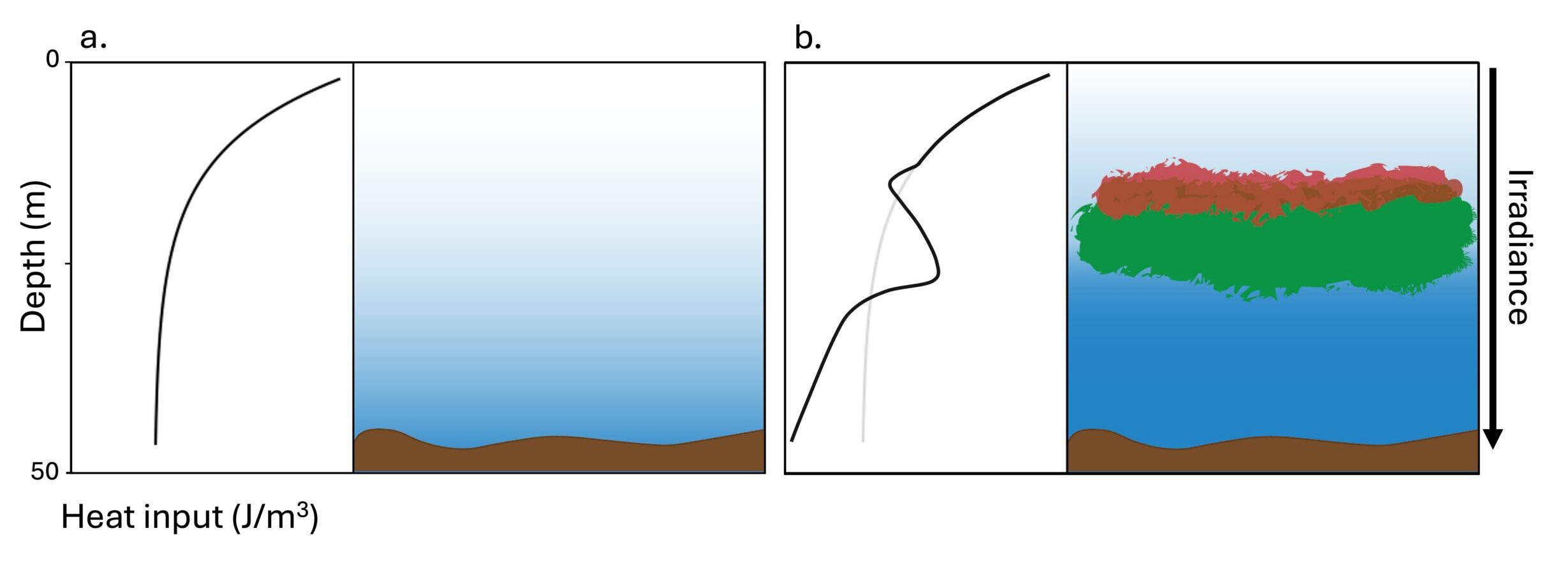
Conceptual figure showing the distribution of irradiance (sunlight) through the water column in the absence (a) and presence (b) of a subsurface phytoplankton bloom. In the presence of a bloom (represented in green), light is scattered in the upper section of the bloom (shown in red) and absorbed within the bloom. The bloom shades depths below it, stealing heat from incoming irradiance (represented in the darkened blue beneath the subsurface bloom), and changing the heating distribution in the water column. Figure source: Gaffey et al., 2026.
Challenges of Conducting Research in the Arctic
Field-based Arctic research often requires careful planning, but conditions in the Arctic can force researchers to adapt quickly. Even when sampling is carefully designed to fit the available time, unexpected circumstances can require changes in approach. Gaffey notes that poor weather can lead to time spent waiting rather than collecting samples. Harsh environmental conditions can also damage equipment, and the remoteness of the region makes it difficult to bring in replacements when something breaks or fails.
To manage these challenges, Gaffey says that flexibility and preparation are essential. More specifically, “having backups of equipment, resourceful peers, a flexible plan, and a good attitude go a long way in reducing the negative impact of those challenges”.
Critical Areas for Future Arctic Research
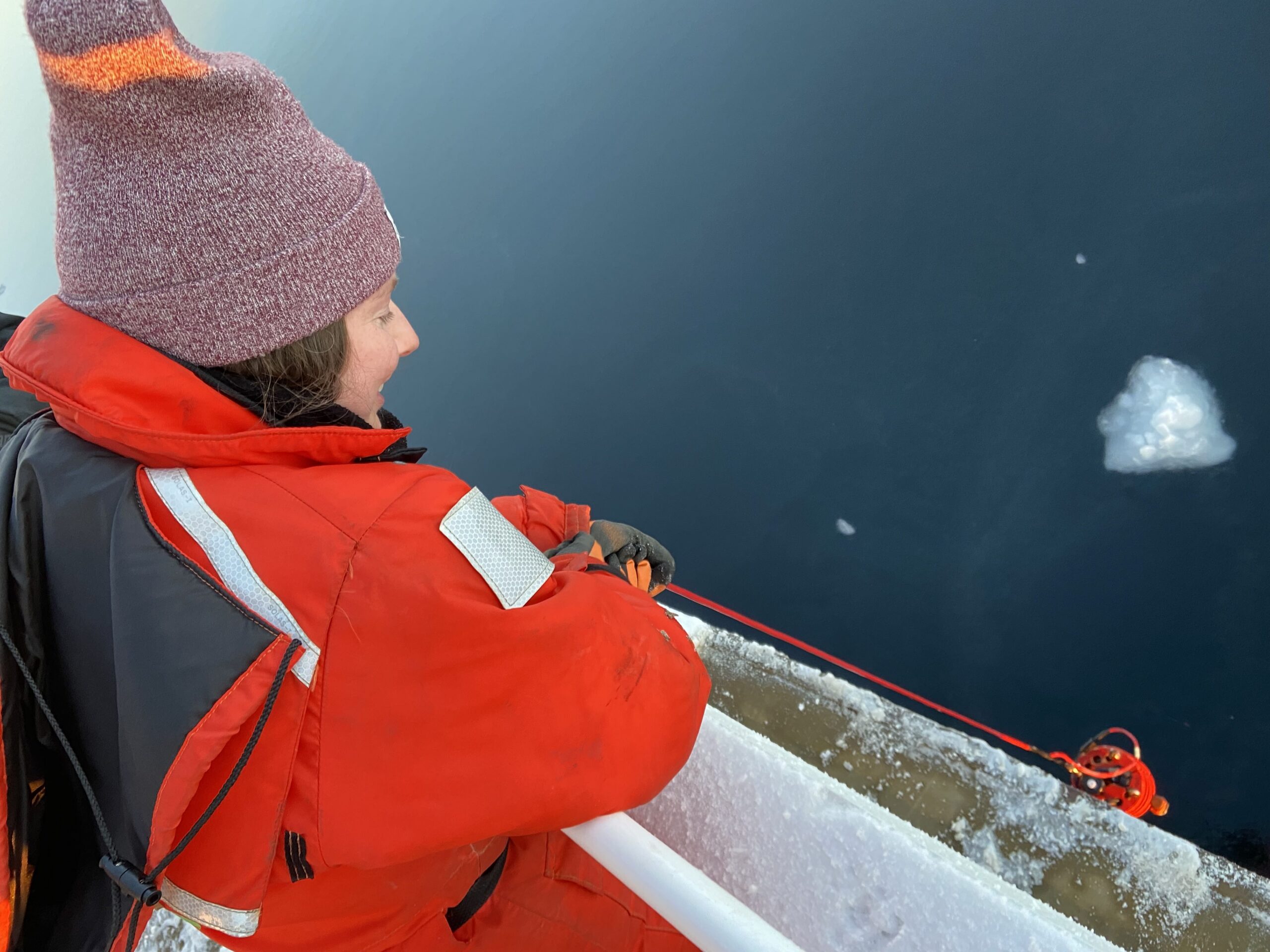
Dr. Clare Gaffey collecting upper ocean optics as part of the U.S. Synoptic Arctic Survey research cruise. Photo by Dr. Seth Danielson.
Gaffey notes that the Arctic is changing in many ways, including warmer temperatures, melting land and sea ice, and a growing human presence in the region through tourism, shipping, and natural resource access. She mentions that while these are large topics on their own, how they interact and continue to affect the Arctic system is still not fully understood. She stresses the importance of keeping a close eye on physical, ecological, and human interactions in the coming years.
At the same time, she points out that gaps in observational data, like in the Siberian Arctic for example, create a major blind spot in understanding these changes. Gaffey explains that this gap biases models and limits our ability to fully represent the Arctic system, leaving society more vulnerable to unexpected outcomes as conditions continue to change. She adds that “mending relations with all Arctic nations, at least as far as science is concerned, will be critical for Arctic research overall in the coming years.”
Open Data, Collaboration, and the Future of Arctic Research
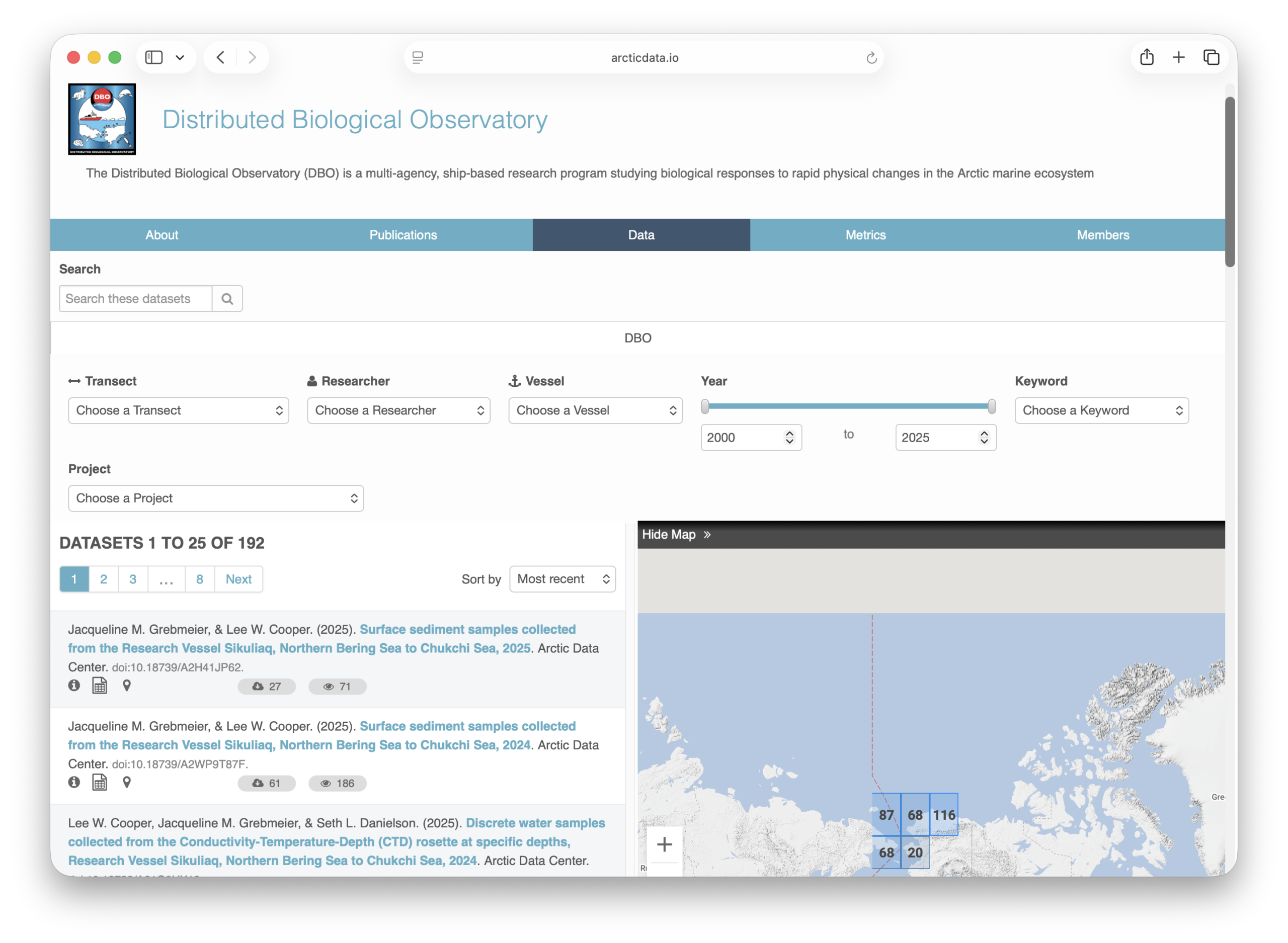
The data exploration page on the Distributed Biological Observatory data portal at the Arctic Data Center.
When asked about data reuse, Gaffey hopes to see the dataset combined with other ecosystem metrics and environmental variables to address more focused or interdisciplinary questions about the changing Arctic. She explained that the data can be used to examine spatial variability across the regions it covers, including the Arctic Ocean shelf, borderland, and basin, and can also be compared with datasets from other Arctic regions. She emphasized that there is value in using phytoplankton pigment data alongside other datasets, including data about nutrients, water masses, and other water column properties, to better understand oceanic changes and their effects on biogeochemical cycling, ecosystems, and people.
When asked about the Arctic Data Center, Gaffey refers to the Center as a vital resource for housing Arctic-specific datasets. She notes that many research questions require multiple types of variables, and having a central hub like the Arctic Data Center supports a more complete understanding of the Arctic system. The Distributed Biological Observatory data portal is one example of that, hosted by the Center and is routinely updated as researchers from the project make new data accessible.
In addition to providing access to data, the Center also supports skill development for researchers. Gaffey attended the Arctic Data Center’s Scalable and Computationally Reproducible Approaches to Arctic Research training course, which focuses on scaling workflows using Python and parallel computing, and helped build her ability to work with large datasets.
Written by Nicole Greco
Community Engagement and Outreach Coordinator